The cases
Each case is summarised from the sources linked below it.
Cultural credit · June 2025 – April 2026
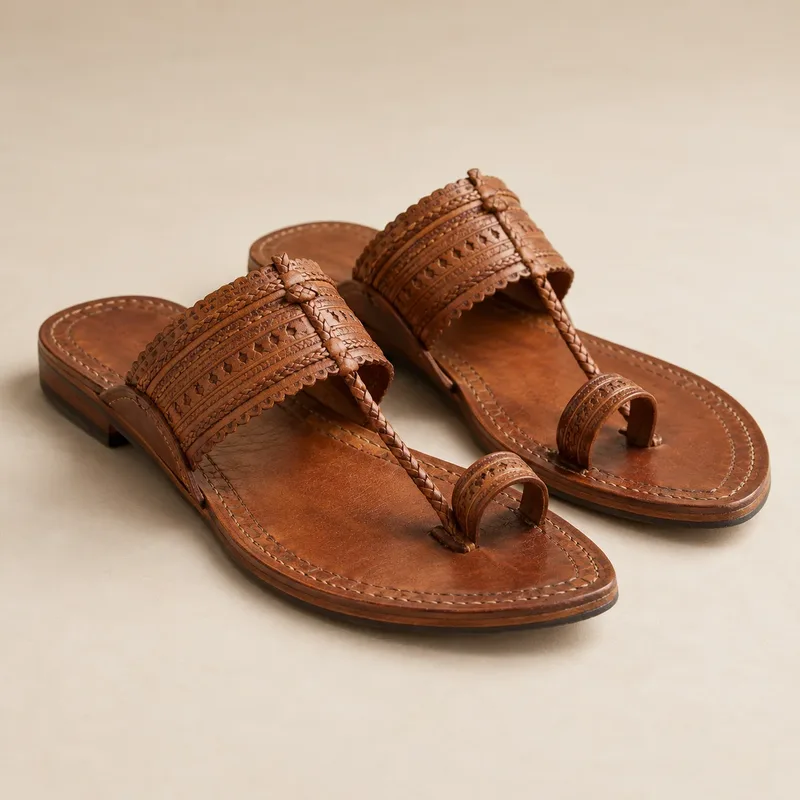
Prada and the Kolhapuri chappal
At its Milan menswear show in June 2025, Prada showed open-toe leather sandals that closely resembled India's GI-tagged Kolhapuri chappals, without crediting their origin, prompting criticism in India.
On 10 December 2025, Prada signed an agreement with the Maharashtra and Karnataka leather development corporations LIDCOM and LIDKAR for a project called "Prada Made in India x Inspired by Kolhapuri Chappals".
On 27 April 2026, Prada announced the limited-edition collection, made by artisans in Maharashtra and Karnataka, with a fully funded three-year training programme for 180 artisans with NIFT and KILT.
Lesson for Indian brands: Credit the origin of a craft from the start. Partnership with the communities behind it can turn criticism into a long-term story.
Sources: FashionUnited, Prada Group
Regulation & retail · 2025 – 2026
Shein in France
French authorities investigated items sold on Shein's marketplace, including childlike sex dolls and weapons, and moved to suspend the platform as Shein opened its first physical store in Paris, at the BHV department store. Shein removed the items and banned such dolls globally.
In June 2026 France fined Shein €22 million over product traceability, environmental labelling and delivery-time violations; reported French fines now exceed €210 million.
In mid-June 2026 BHV ended the partnership; its outgoing CEO called it a "strategic error". Around 100 brands had left BHV after Shein arrived.
Lesson for Indian brands: Retail partnerships carry reputational risk. Labelling, traceability and marketplace controls are now enforced, not optional.
Sources: EMARKETER, ABC News / AP
AI & creativity · August 2025
AI-generated models in advertising
A Guess advertisement in the August 2025 issue of Vogue US used AI-generated models, disclosed in small print. Readers and creators criticised it widely, arguing it threatens jobs and the magazine's photographic heritage.
Vogue said the ad came from its advertising department, not its editorial team.
Lesson for Indian brands: Use AI openly and carefully. Audiences reward transparency and still value real people, photographers and models.
Sources: FashionNetwork
Cultural credit · 2025
Adidas and the Oaxaca huarache
Officials in the Mexican state of Oaxaca accused Adidas of copying traditional Zapotec huaraches for its Oaxaca Slip-On without permission or compensation, and threatened legal action.
Adidas entered talks with local authorities and later issued a public apology.
Lesson for Indian brands: Several countries now protect traditional designs legally. India's GI tags, such as Kolhapuri chappals, play a similar role.
Sources: nss magazine
Sustainability claims · 2026
Greenwashing scepticism
Greenwashing has become a buying barrier: in one 2026 consumer survey cited by Shopify, 43% of shoppers named it as a reason they hesitate to buy from sustainable brands.
Regulators are acting too: France's fines against Shein included environmental labelling breaches.
Lesson for Indian brands: Make specific, provable claims (fibre, certification, origin) instead of vague "eco" language.
Sources: Shopify (citing Sustainable Jungle), EMARKETER
This report summarises public reporting as of October 2026 for industry analysis. It does not make allegations beyond what the cited sources report.