Anatomy of a couture gown
Toiles, corsetry, interfacing, hand finishing: what is inside a couture gown and why it costs what it does.
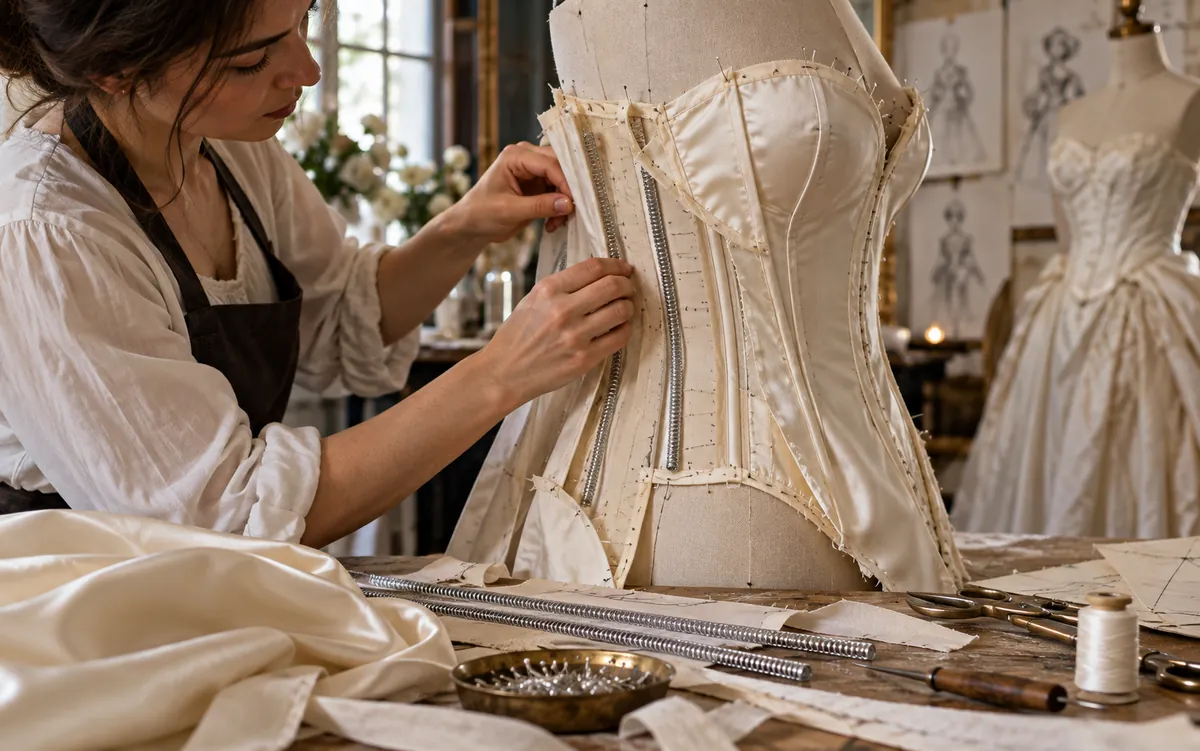
What makes a couture gown special is largely invisible. Its structure, finishing and fit are built in layers.
The toile
Before any precious fabric is cut, the design is made in plain cotton (a toile or muslin) and fitted on the client. Several toiles may be made until the fit is perfect.
The inner structure
- Corset or boned bodice: shapes the body and carries the weight of the skirt.
- Waist stay: a firm tape that anchors the gown at the waist.
- Interfacing and underlining: give the fabric body and support embroidery.
- Petticoats, tulle and horsehair braid: create volume and hold hems.
Embellishment
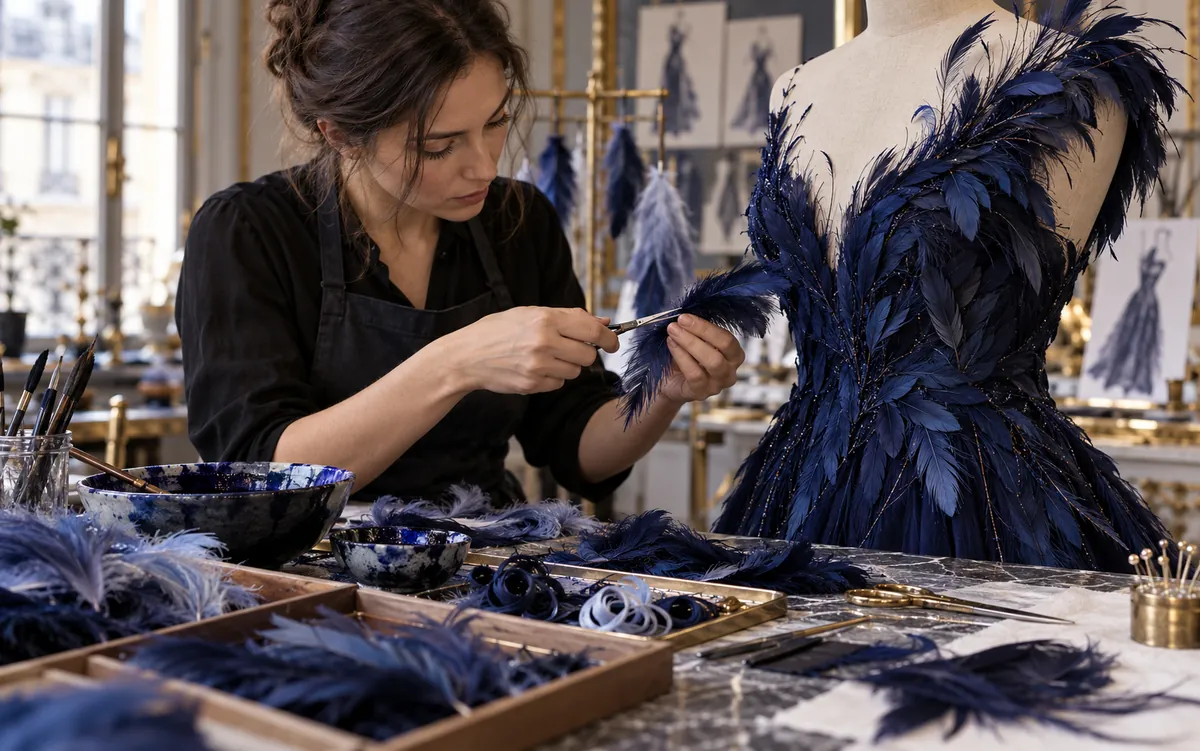
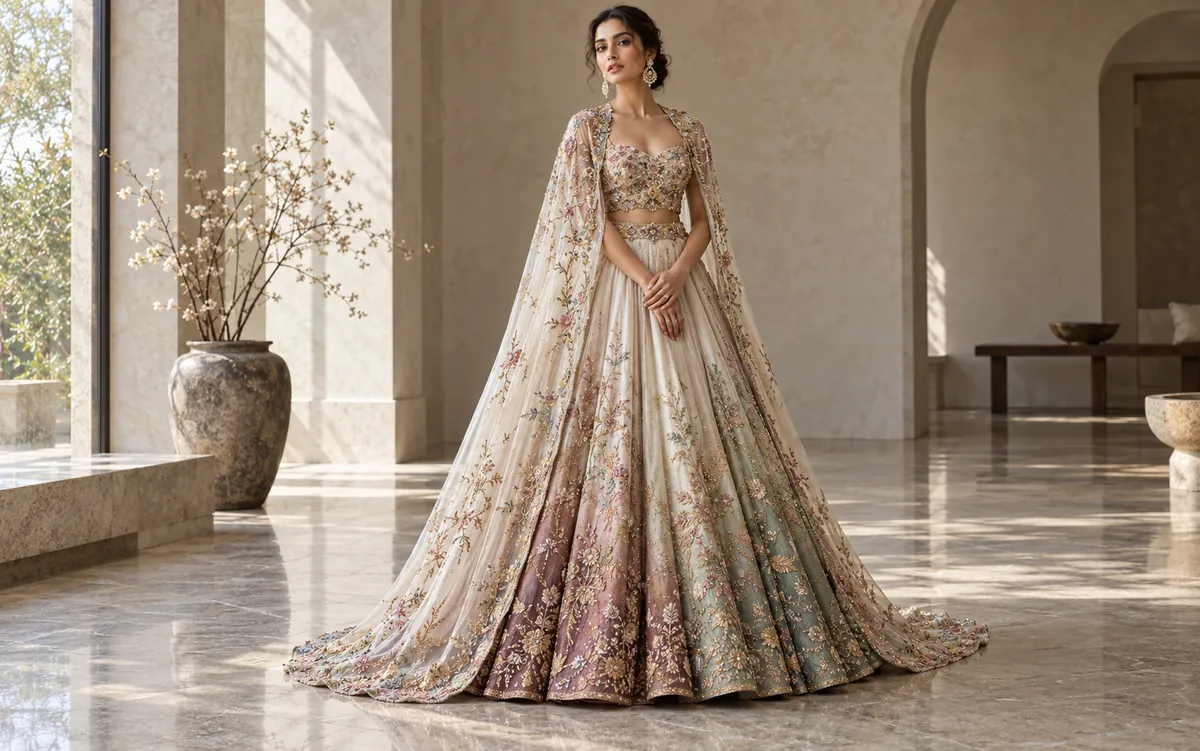
Embroidery is often worked on the cut pieces before assembly, so motifs line up across seams. Weight is calculated so the gown still moves well.
Hand finishing
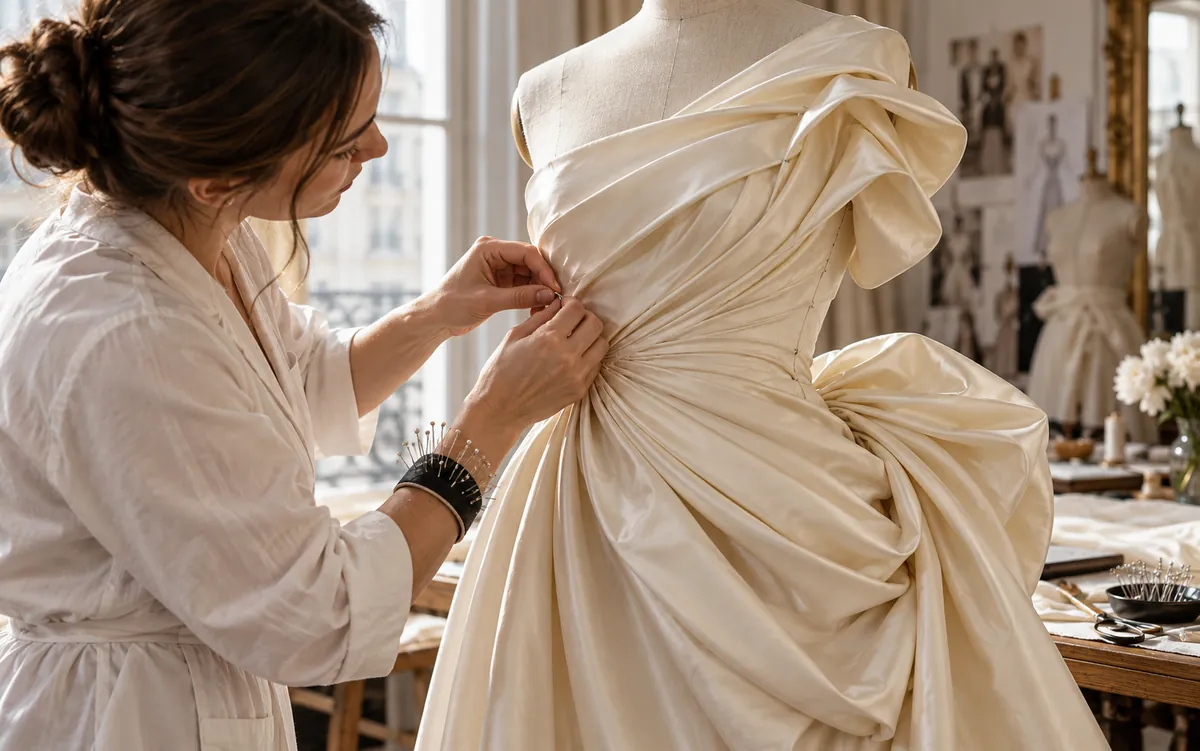
Hand-rolled hems, hand-sewn linings, covered hooks and invisible stitches make the inside as beautiful as the outside.
Time
A complex couture gown can take hundreds, sometimes thousands, of hours across pattern-making, fittings, embroidery and finishing.