The hand embroideries of India
Chikankari, zardozi, kantha, phulkari, kasuti, Kutch work and more: where each comes from and how to use it today.
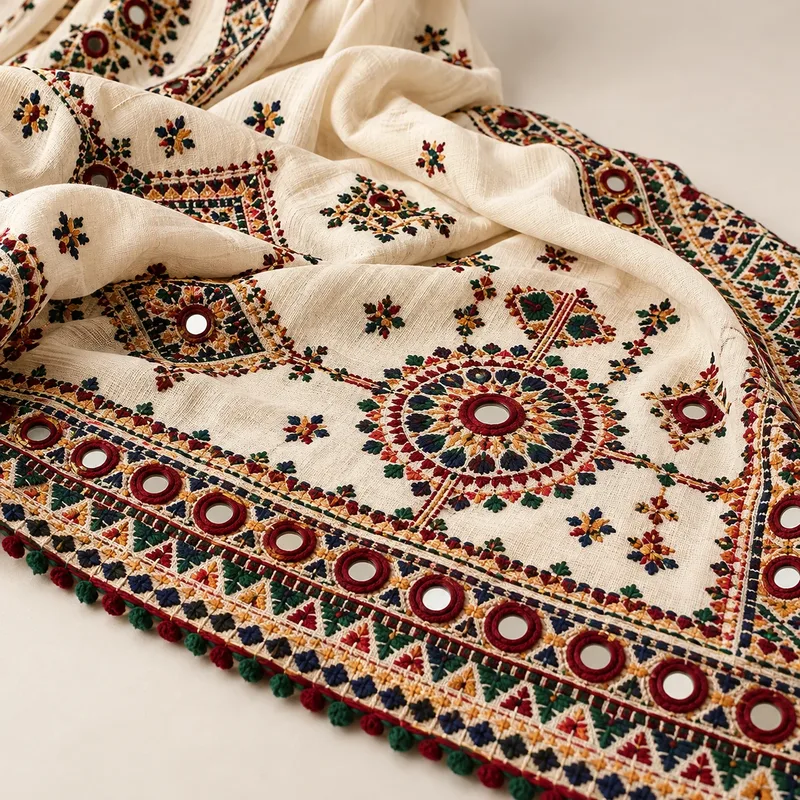
India's hand embroideries are among the richest in the world, and each region has its own language of stitch, colour and motif.
North
Chikankari from Lucknow is delicate white-on-white shadow work. Zardozi uses metal threads for raised, jewel-like ornament. Phulkari from Punjab covers cloth in bright floss silk. Kashmir is known for fine sozni needlework and wool crewel.
West
Kutch work and Rabari embroidery from Gujarat combine interlaced stitches with mirrors. Rajasthan's gota patti appliqués gold and silver ribbon.
East
Kantha from Bengal and Odisha uses running stitches to quilt and decorate. Odisha's Pipli appliqué uses bright cut fabric.
South
Kasuti from Karnataka is counted geometric work identical on both sides. Lambani embroidery uses mirrors and coins, and Toda embroidery from the Nilgiris is red and black on white.
Using hand work today
- Credit the craft and region in product descriptions.
- Work with artisan clusters on fair terms.
- Use hand work as a focal detail, not only all-over.
- Allow longer lead times and expect beautiful irregularity.