A designer's guide to Indian handlooms
Khadi, Chanderi, Maheshwari, Banarasi, ikat and more: what makes each one special and how to design with it.
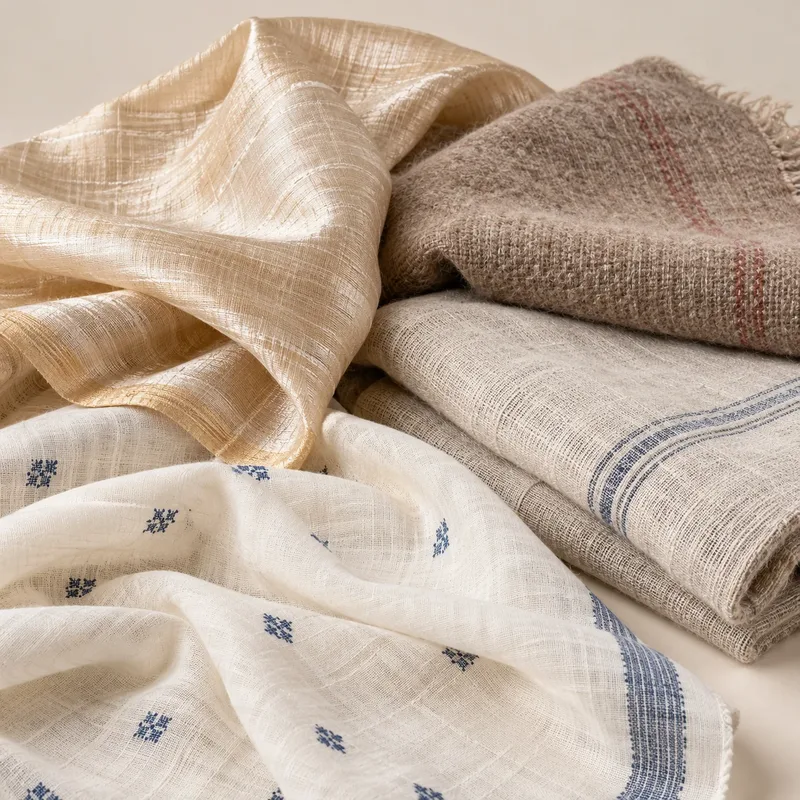
India has one of the richest handloom traditions in the world. Each region's weave has its own fibre, structure and motifs, and knowing them helps designers use them with respect and confidence.
Light and breathable
Khadi is hand-spun and hand-woven, with a gentle irregular texture. Chanderi and Kota doria are fine and airy, ideal for summer kurtas and dupattas. Jamdani adds motifs inlaid by hand into fine muslin.
Festive silks
Banarasi brocades carry rich zari jacquard motifs; Kanjeevaram is heavy silk with contrast borders; Paithani is famous for its peacock and lotus borders; Maheshwari offers lighter silk-cotton with reversible borders.
Resist-dyed
Ikat (Pochampally, and the double ikat Patola) is dyed before weaving, so the pattern appears as the yarns meet. Bandhani and Ajrakh are resist-dyed after weaving.
Designing with handloom
- Ask about provenance: where and by whom the cloth was woven.
- Expect small irregularities: they are part of the value.
- Test shrinkage and colour fastness before cutting.
- Let the cloth lead: simple cuts often show handloom best.
- Credit the craft in product descriptions.