Fibre traceability: from farm to garment, digitally
Digital traceability platforms and the coming EU Digital Product Passport. What fashion brands need to prepare.
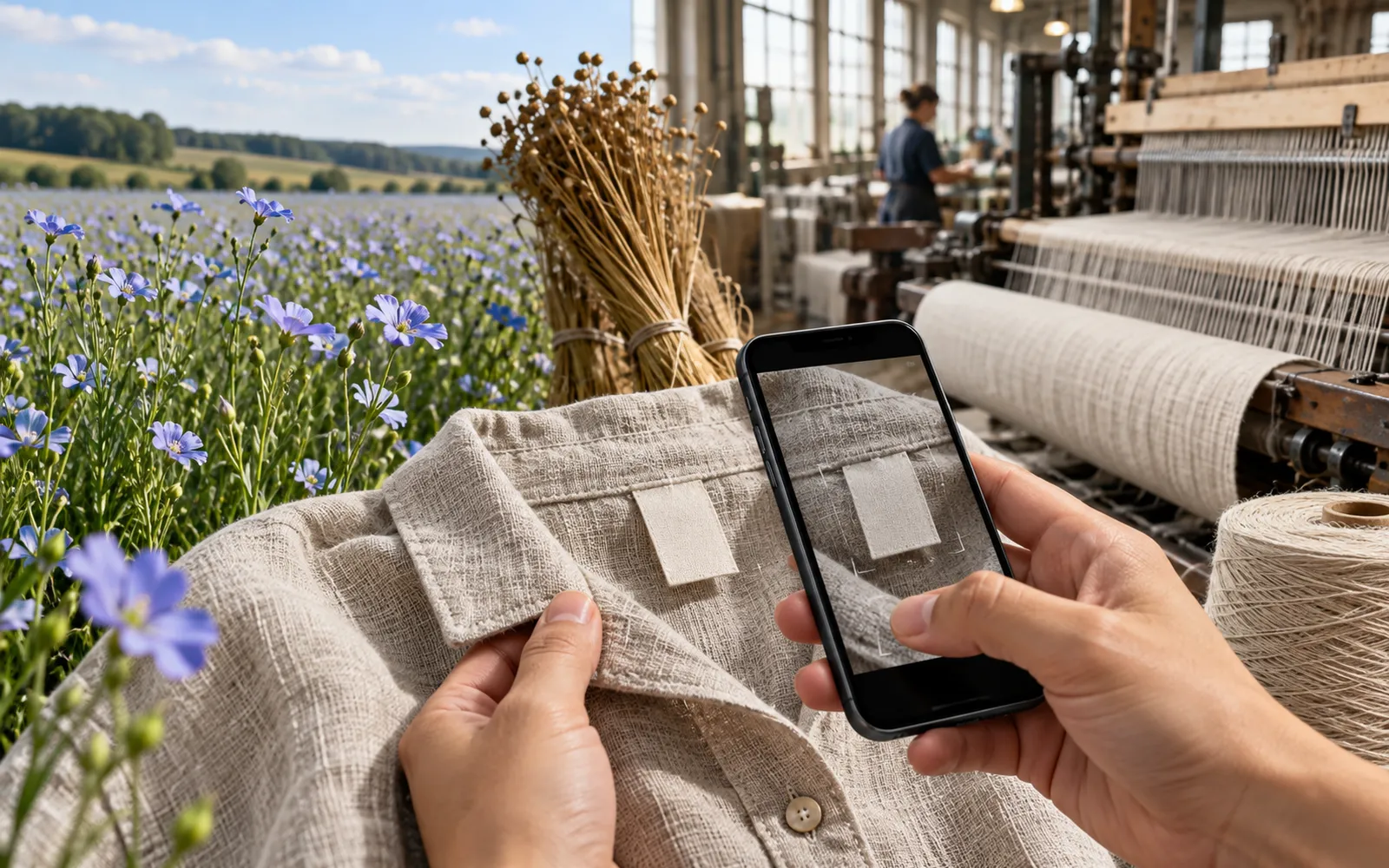
Buyers and regulators increasingly want proof of where a fibre was grown and how it was processed. Digital traceability platforms record each step from farm to finished garment.
Where it was seen
The flax-linen and hemp alliance runs a digital traceability platform with TextileGenesis (Lectra Group) for its Masters of FLAX FIBRE™ and Masters of LINEN™ certifications, presented at Milano Unica in July 2026. In the EU, the Ecodesign for Sustainable Products Regulation (ESPR) will introduce a Digital Product Passport for textiles; the Commission's working plan gives an indicative 2027 timeline for the textile delegated act, with obligations expected to follow about 18 months after it enters into force.
How it works
Each batch of certified fibre gets a digital record that travels with it through spinning, weaving and making. The passport is expected to cover material composition, manufacturing, environmental indicators, chemical compliance, supply-chain traceability and durability or recyclability. Final data rules are not yet adopted.
What it means for Indian brands
Indian exporters to the EU will need traceability data from their suppliers. Domestic brands can use the same data as a premium story for handloom, organic cotton and linen.
What to do now
- Start collecting fibre origin and certificates for your top 20 styles.
- Ask suppliers which traceability platforms they already use.
- Watch for the EU textile delegated act; Forecut will update this report when it is adopted.
Sources: Alliance for European Flax-Linen & Hemp, COSH!.