Mono-material thread: making garments recyclable at the seams
Amann's AeoniQ Fil cellulose thread lets a cotton or viscose garment stay one material. Why seams matter for recycling.
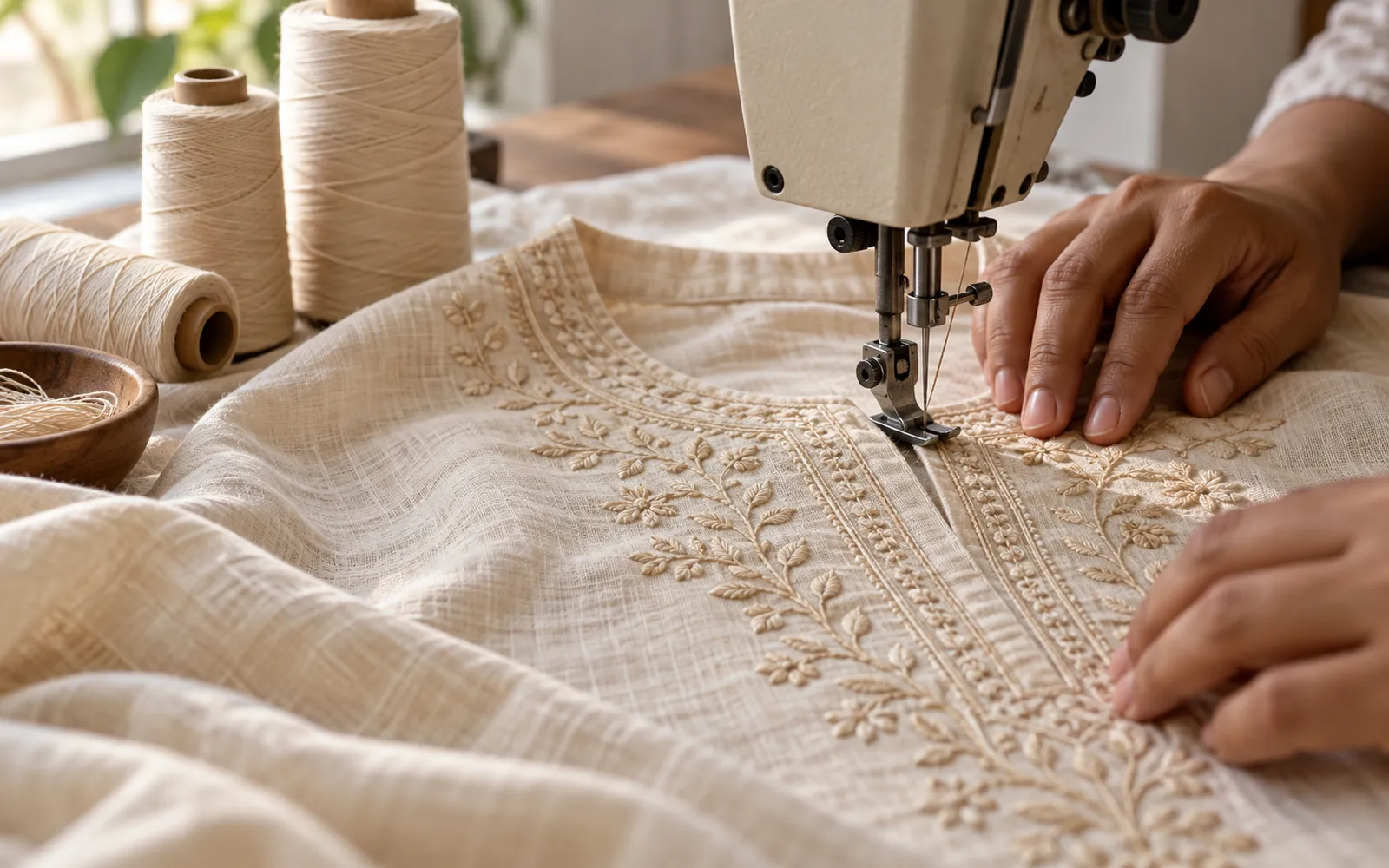
A cotton shirt is rarely 100% cotton: it is usually sewn with polyester thread. Those synthetic seams complicate recycling. A new cellulose thread lets the whole garment stay in one material family.
Where it was seen
Amann (Germany) won a 2026 Techtextil innovation award for AeoniQ Fil, described as the world's first sewing and embroidery thread made from AeoniQ, a wood-pulp-based cellulose fibre. It made its market debut at Texprocess in April 2026.
How it works
Amann describes the thread as microplastic-free and biodegradable, with tear resistance and elasticity approaching synthetic threads and about twice the elasticity of conventional cellulose threads. It is meant for mono-material garments and home textiles.
What it means for Indian brands
Embroidery is central to Indian fashion. A cellulose embroidery thread could let cotton and viscose kurtas, shirts and home textiles be designed for recycling, a growing requirement from European buyers.
What to do now
- Test the thread on cotton basics and embroidered styles for seam strength.
- Combine with cellulose labels and trims for a true mono-material product.
- Watch EU recycling and ecodesign rules that reward mono-material design.
Sources: Textile World.