Water resistance in the yarn: performance without PFAS finishes
Unifi's Resist2O Pro builds water resistance into the yarn instead of a chemical finish. What it means for outerwear and travel wear.
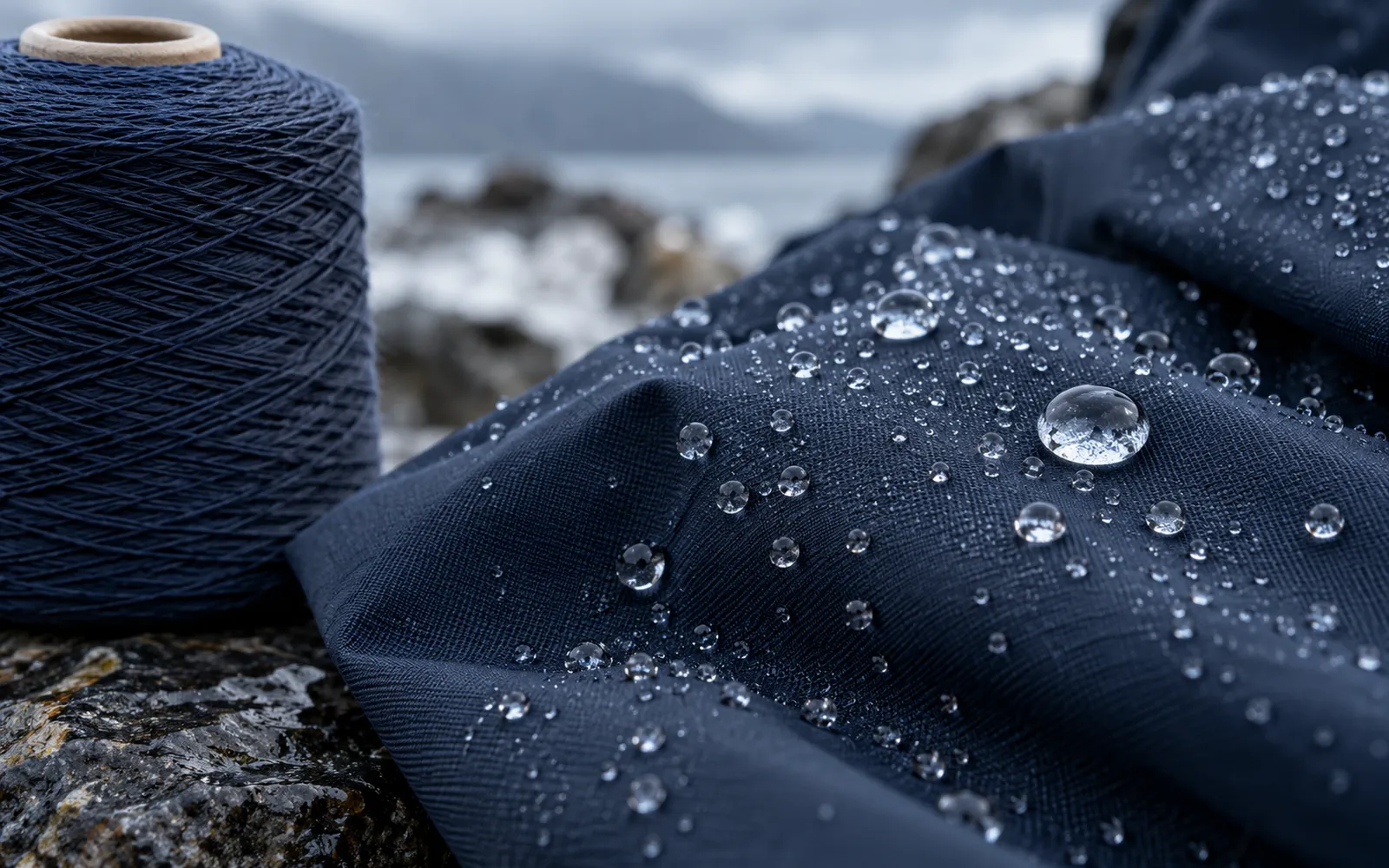
Rainwear and outdoor clothing usually get their water repellence from a topical finish (DWR), historically based on fluorinated chemistry (PFAS) that regulators and brands are phasing out. A new approach moves water resistance into the yarn itself.
Where it was seen
Unifi announced Resist2O Pro on 12 October 2026 and shows it at Performance Days in Munich (13–14 October 2026), then at the Functional Fabric Fair in Portland (26–28 October 2026). The 2026 Techtextil innovation awards also rewarded two other PFAS-free routes: a dry plasma coating that makes yarns water-repellent (EC0Tex, Bäumlin & Ernst) and plant-based fatty acids grafted onto cellulose fibres (H&B Materials).
How it works
Resist2O Pro is engineered to minimise water absorption without topical treatments or fluorinated chemistry (Unifi states fluorine-free and PFOA-free, under 5 ppb), so the separate finishing step disappears. It works across different fabric constructions, for apparel, footwear, furnishings and industrial textiles.
What it means for Indian brands
Monsoon wear, commuter jackets, travel trousers and school and uniform fabrics all need water resistance. As export buyers demand PFAS-free products, yarn-level and plant-based solutions will become a sourcing requirement, not a bonus.
What to do now
- Audit which of your products still use fluorinated water-repellent finishes.
- Request PFAS-free samples from yarn and fabric suppliers for AW27 outerwear.
- Check durability after washing in your own tests before making performance claims.
Sources: Innovation in Textiles, Textile World.