Waterless denim finishing: the new standard for washes
Low-water washing and low-impact indigo are scaling across denim. Why Indian denim makers should move first.
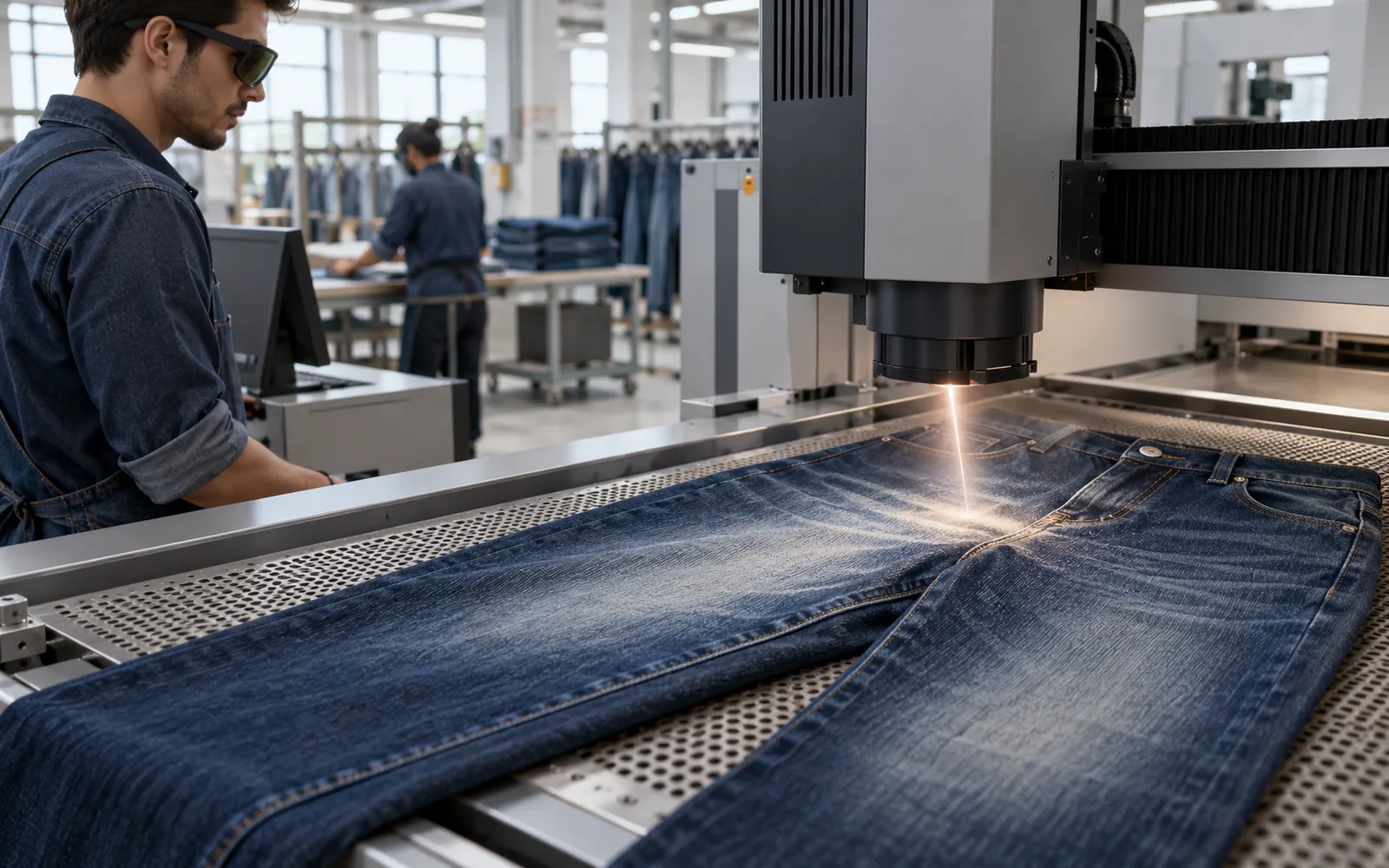
Denim's worn-in look traditionally comes from heavy wet processing: stone washing, bleaching and repeated rinses that use large amounts of water and chemicals. Waterless and low-water finishing is now scaling across the industry.
Where it was seen
At Intertextile Shanghai (August 2026), Turkish mill Kipaş Denim presented circular solutions with waterless finishing and low-impact indigo dyeing, and Pakistan's Azgard Nine showed low-resource washing. Première Vision Denim's AW27-28 directions also put regenerative cotton and responsible denim at the centre.
How it works
Common tools include laser finishing to create fades and whiskers without chemicals, ozone in place of bleaching, nano-bubble or mist technology that uses a fraction of the water, and indigo dyeing processes that cut water, energy and chemical use.
What it means for Indian brands
India is one of the world's largest denim producers, and water stress is a real constraint in denim clusters. Brands that can document low-water processing gain an edge with export buyers and with consumers.
What to do now
- Ask laundries for the water use per garment of each wash recipe.
- Move hero washes to laser and ozone recipes first.
- Combine with regenerative or organic cotton for a complete denim story.
Sources: Textile World, Première Vision.