Anatomy of a couture gown
Toiles, corsetry, interfacing, hand finishing: what is inside a couture gown and why it costs what it does.
What makes a couture gown special is largely invisible. Its structure, finishing and fit are built in layers.
The toile
Before any precious fabric is cut, the design is made in plain cotton (a toile or muslin) and fitted on the client. Several toiles may be made until the fit is perfect.
The inner structure
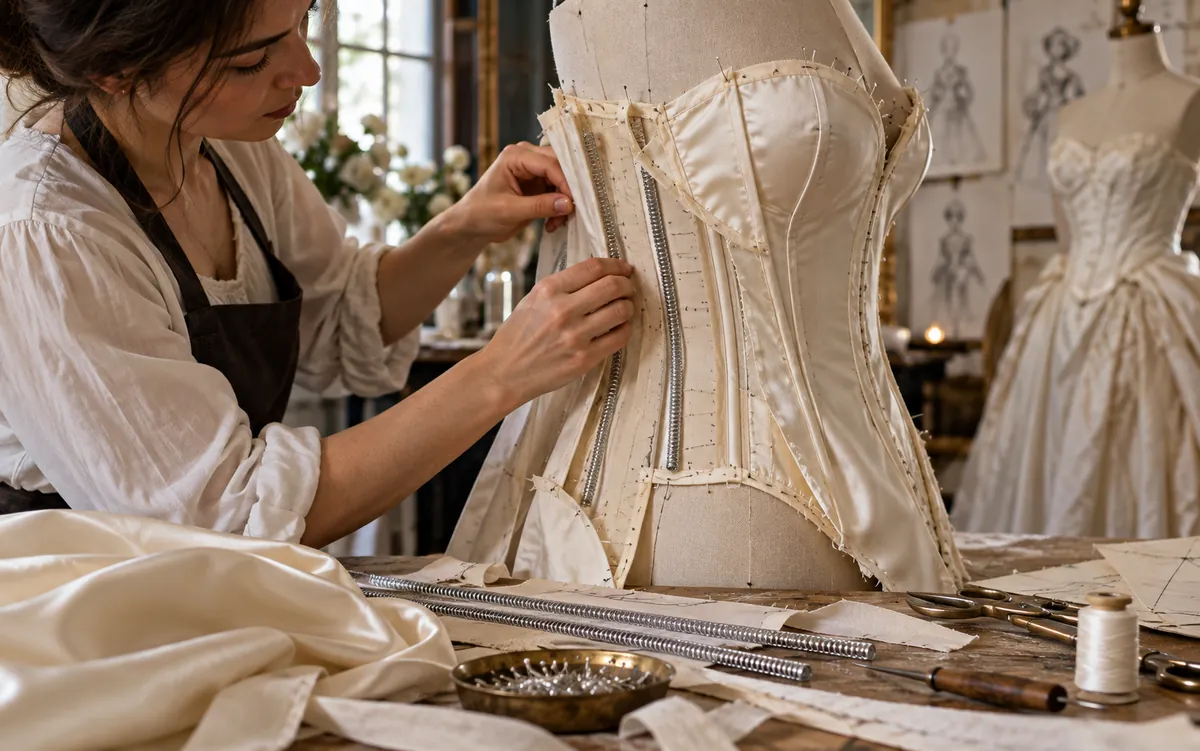
- Corset or boned bodice: shapes the body and carries the weight of the skirt.
- Waist stay: a firm tape that anchors the gown at the waist.
- Interfacing and underlining: give the fabric body and support embroidery.
- Petticoats, tulle and horsehair braid: create volume and hold hems.
Embellishment
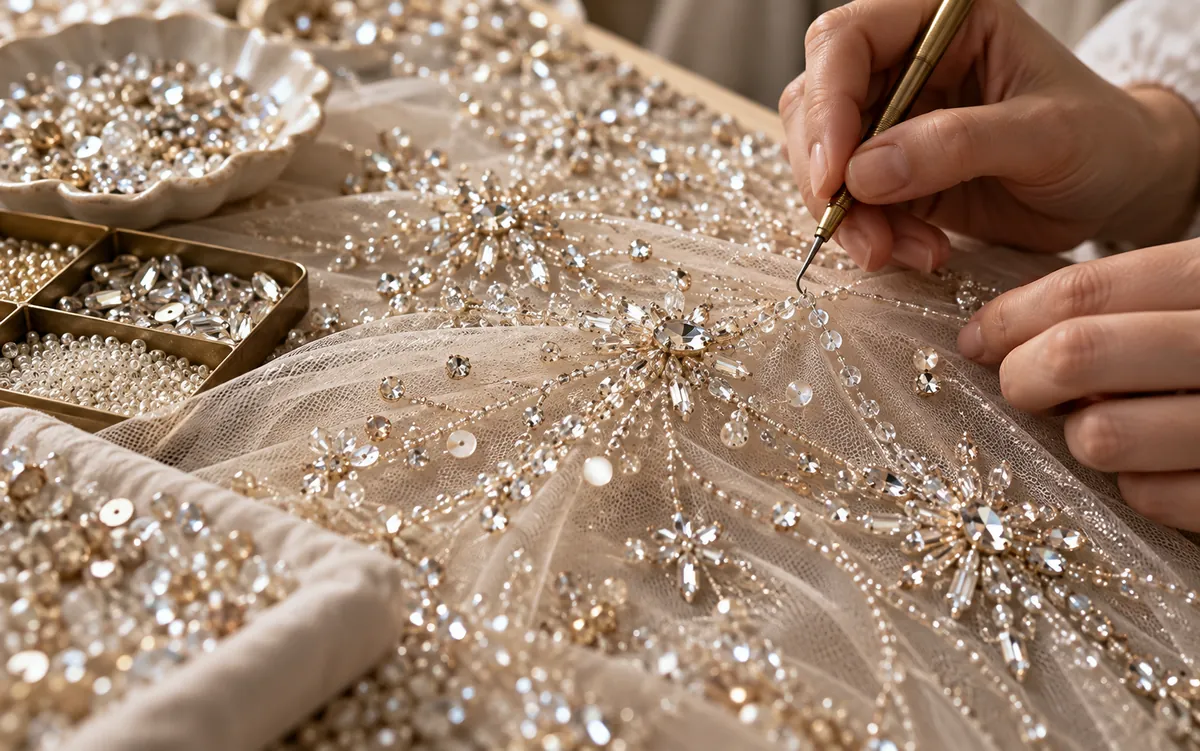
Embroidery is often worked on the cut pieces before assembly, so motifs line up across seams. Weight is calculated so the gown still moves well.
Hand finishing
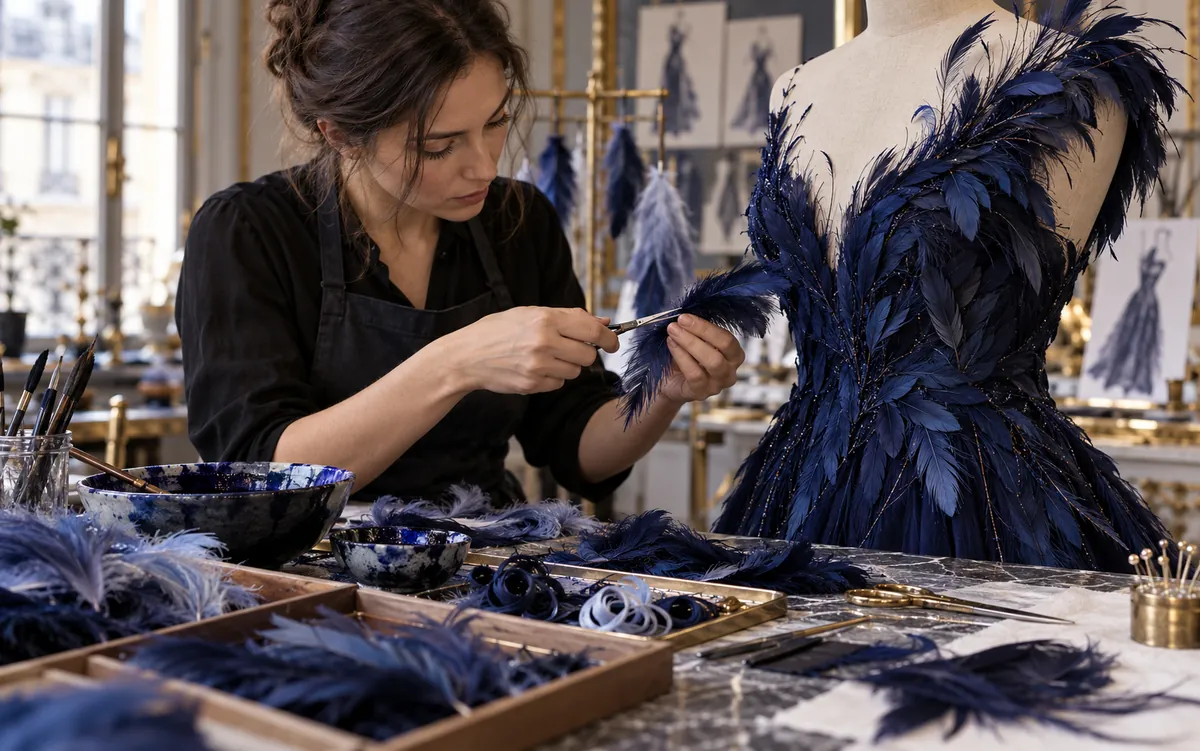
Hand-rolled hems, hand-sewn linings, covered hooks and invisible stitches make the inside as beautiful as the outside.
Time
A complex couture gown can take hundreds, sometimes thousands, of hours across pattern-making, fittings, embroidery and finishing.
Fabric layers from outside in
- Fashion fabric: the visible silk, lace, organza or velvet.
- Underlining: a fabric such as silk organza basted to the fashion fabric to give body and hold embroidery.
- Interlining or structure: canvas, boning channels and padding where shape is needed.
- Lining: a smooth, breathable layer against the body, often silk.
Boning and support
Spiral steel boning bends with the body in two directions and is often used in couture bodices; flat steel is used where a straight line is needed, such as the centre back. Lighter synthetic boning suits smaller or softer structures. Bones are placed along seams and darts to shape the torso and keep the bodice from collapsing.
Volume
Skirts get their shape from layers of tulle, organza or crinoline, sometimes with horsehair braid in the hem to hold it out. The amount of volume is planned with the client's height and the event: a ballroom gown and a gown for a seated dinner are built differently.
Closures
Couture gowns often close with hand-sewn hooks and bars, covered buttons and loops, or a concealed zip finished by hand. An inner corset may close separately, so the outer gown can be adjusted without pressure on the fabric.
What ready-to-wear can borrow
- A waist stay in evening dresses to keep them in place.
- Underlining under embroidered panels to prevent puckering.
- Horsehair braid in hems for movement.
- A well-finished interior: it is visible when the customer tries the piece on and influences the purchase.
Couture across cultures
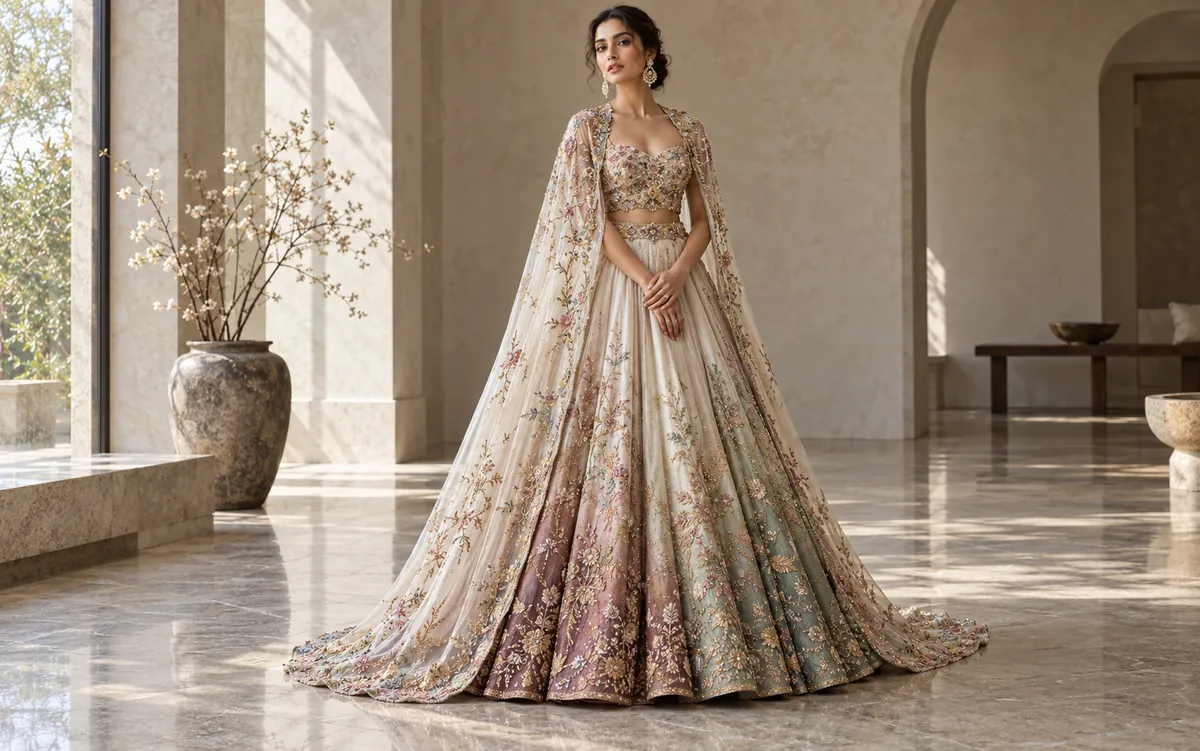
The same principles apply to a structured lehenga, a Gulf evening kaftan with embroidered yokes, or a Western ball gown: a fitted inner structure carries the weight, and decoration is planned on the pattern pieces before assembly.
Common questions
What is a toile? A test version of a garment made in plain cotton fabric, used to perfect the fit before cutting the final fabric.
Why do couture gowns have an inner corset? It shapes the body and carries the weight of the skirt and embellishment, so the outer fabric sits smoothly.
How many fittings does a couture gown need? Often three or more, depending on complexity and the client's availability.