Kids' couture: designing occasion wear children can actually wear
Comfort, safety and family colour stories: the rules for children's wedding and festive couture.
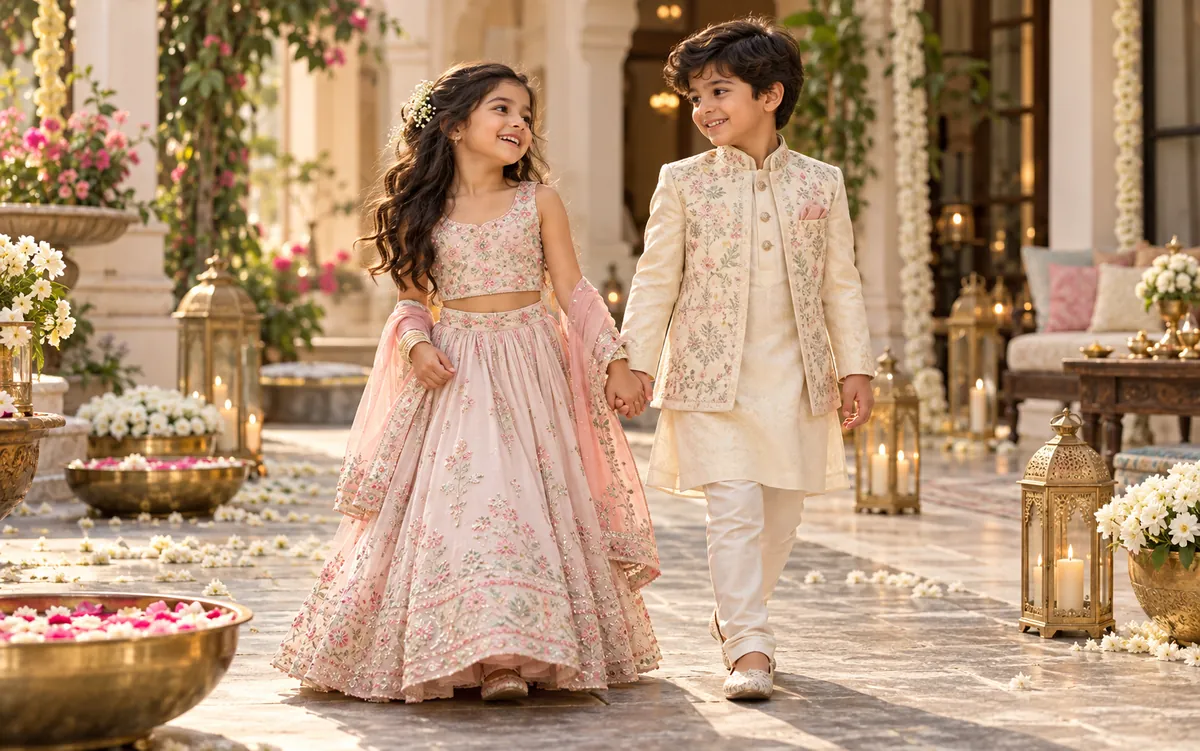
Children's occasion wear is a fast-growing part of Indian couture, driven by family weddings and coordinated looks. Designing it well means respecting how children move.
Comfort first
- Soft linings in cotton or silk next to the skin.
- No exposed metal threads, sharp sequins or scratchy seams inside.
- Elasticated or adjustable waists and easy fastenings.
- Lightweight fabrics so the outfit can be worn for hours.
Safety
Small beads, mirrors and loose trims are a choking risk for young children. Secure every embellishment, avoid long cords near the neck and test that trims survive pulling.
The family colour story
Mini versions of adult looks are popular. Use the same palette and one shared motif rather than copying every detail; it looks more refined and keeps the child's outfit light.
Sizing
Children grow quickly. Offer extra seam allowance, adjustable fastenings and clear size guidance so the outfit lasts through the season.
Construction details that make a difference
- Full linings: line embroidered panels completely so no stitches touch the skin.
- Bound seams: finish inside seams with soft binding instead of overlocking where possible.
- Lightweight volume: use soft tulle or cotton cancan rather than stiff nets for skirts.
- Easy dressing: side or back openings with zips or snaps; avoid long rows of hooks for young children.
- Detachable layers: jackets, capes or dupattas that can come off when it gets hot.
Fabric choices
Cotton silk, chanderi, mulmul, soft georgette and lightweight raw silk work well. Avoid heavy brocades for very young children. For winter functions, use velvet sparingly as a jacket or waistcoat over a breathable base layer.
Safety checklist before production
- Pull-test every bead, sequin, mirror and button.
- Keep cords and ties short and away from the neck for younger age groups.
- Check that dyes and finishes are suitable for children's skin and wash-tested.
- Avoid small detachable parts on garments for children under three.
- Label care instructions clearly; parents will wash these garments more than adult occasion wear.
Many markets regulate children's clothing, for example rules on cords and drawstrings, small parts and chemical content. If you export, check the rules for each destination before finalising designs.
Where the demand is
Coordinated family looks for weddings and festivals drive the category in India and in South Asian communities abroad. In the Gulf, Eid outfits for children are a major seasonal purchase. In Europe and North America, flower-girl and page-boy outfits and holiday party dresses follow the same rules: comfort, safety and a link to the adult outfits.
Ranging tip
Build a children's range from three or four adult hero styles, simplified, and offer them in age bands. Matching colour and one motif are enough to make the family story clear.
Common questions
What fabrics are best for children's occasion wear? Breathable, soft fabrics such as cotton silk, chanderi and soft georgette, always with a cotton or silk lining next to the skin.
Can children wear heavy embroidery? Keep it light and secure. Use embroidery on outer layers or borders, and avoid sharp or loose trims, especially for young children.
How should kids' occasion wear be sized? By age bands with clear measurement charts, plus extra seam allowance or adjustable fastenings so the outfit fits longer.