Choosing the right fabric for embroidery
Which base fabrics suit zardozi, chikankari, sequins and 3D appliqué, and how to avoid puckering.
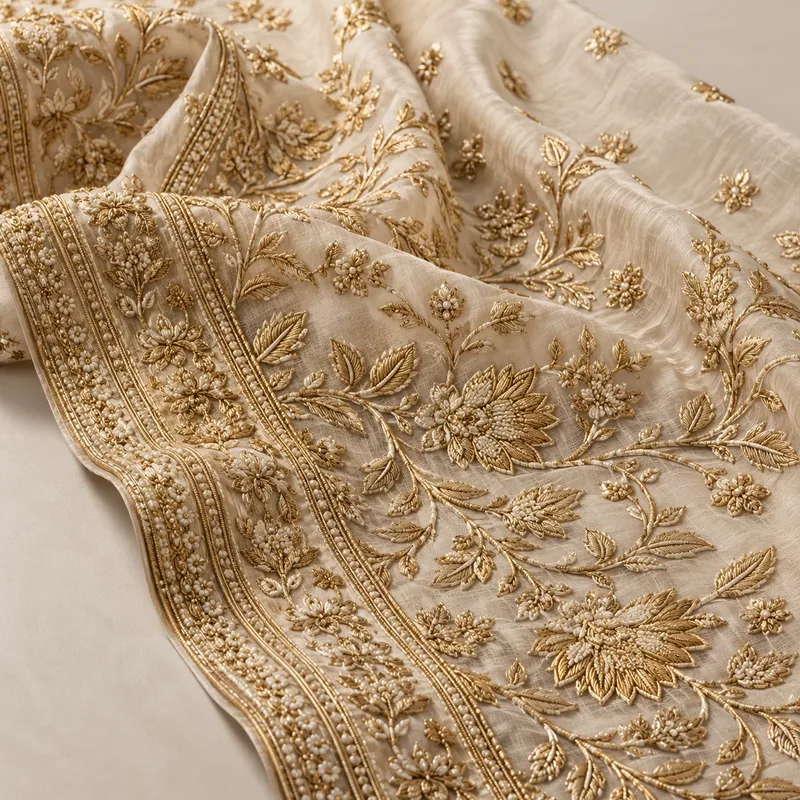
Embroidery is only as good as the fabric underneath it. The base must support the weight of the work and still drape well.
Match fabric to technique
- Heavy metal work (zardozi, dabka): raw silk, dupion, velvet.
- Fine thread work (chikankari, shadow work): mulmul, voile, georgette.
- Sequins and beads: crepe, georgette, net.
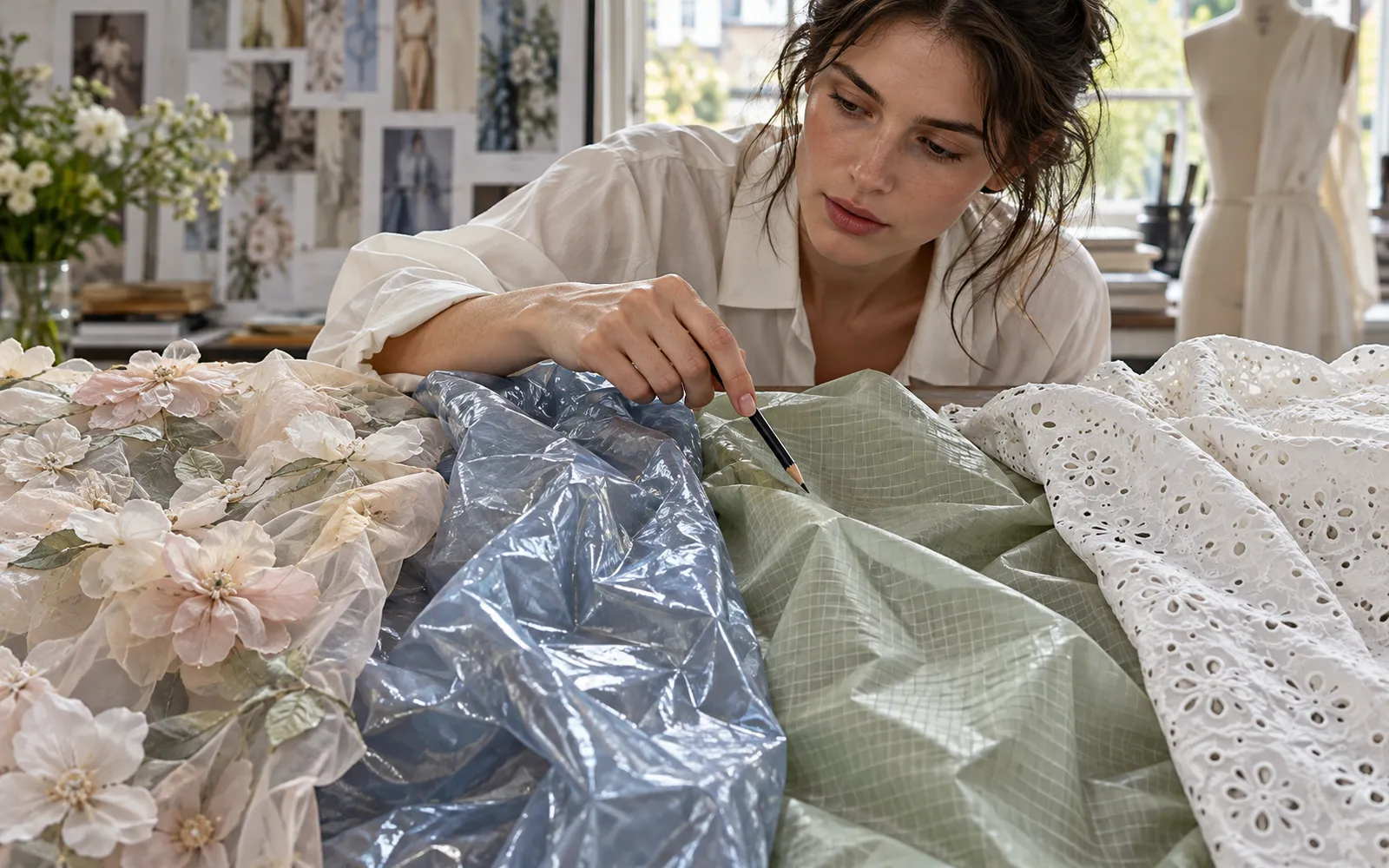
- 3D flowers and appliqué: organza, tulle, net.
- Gota and zari borders: chanderi, silk, cotton-silk.
Avoid puckering
Use an appropriate stabiliser or backing, keep the fabric taut on the frame, and test a sample before production.
Plan for weight
Heavy embroidery adds significant weight. Support it with linings, interfacing or inner structure so the garment hangs correctly.
Stabilisers and backings
- Tear-away: removed after stitching; for stable wovens.
- Cut-away: stays in the garment; for knits and stretchy fabrics that need ongoing support.
- Wash-away or water-soluble: dissolves after stitching; for sheer fabrics, lace effects and free-standing work.
- Fusible interfacing: adds body to light fabrics before hand or machine embroidery.
Hand vs machine embroidery bases
Hand embroidery on an adda or frame keeps the fabric taut and can work on very fine bases with skilled artisans. Machine embroidery stitches faster and puts more tension on the fabric, so it usually needs firmer bases or stronger stabilisers. Multi-head machines also need consistent fabric widths and good hooping.
Weight and comfort
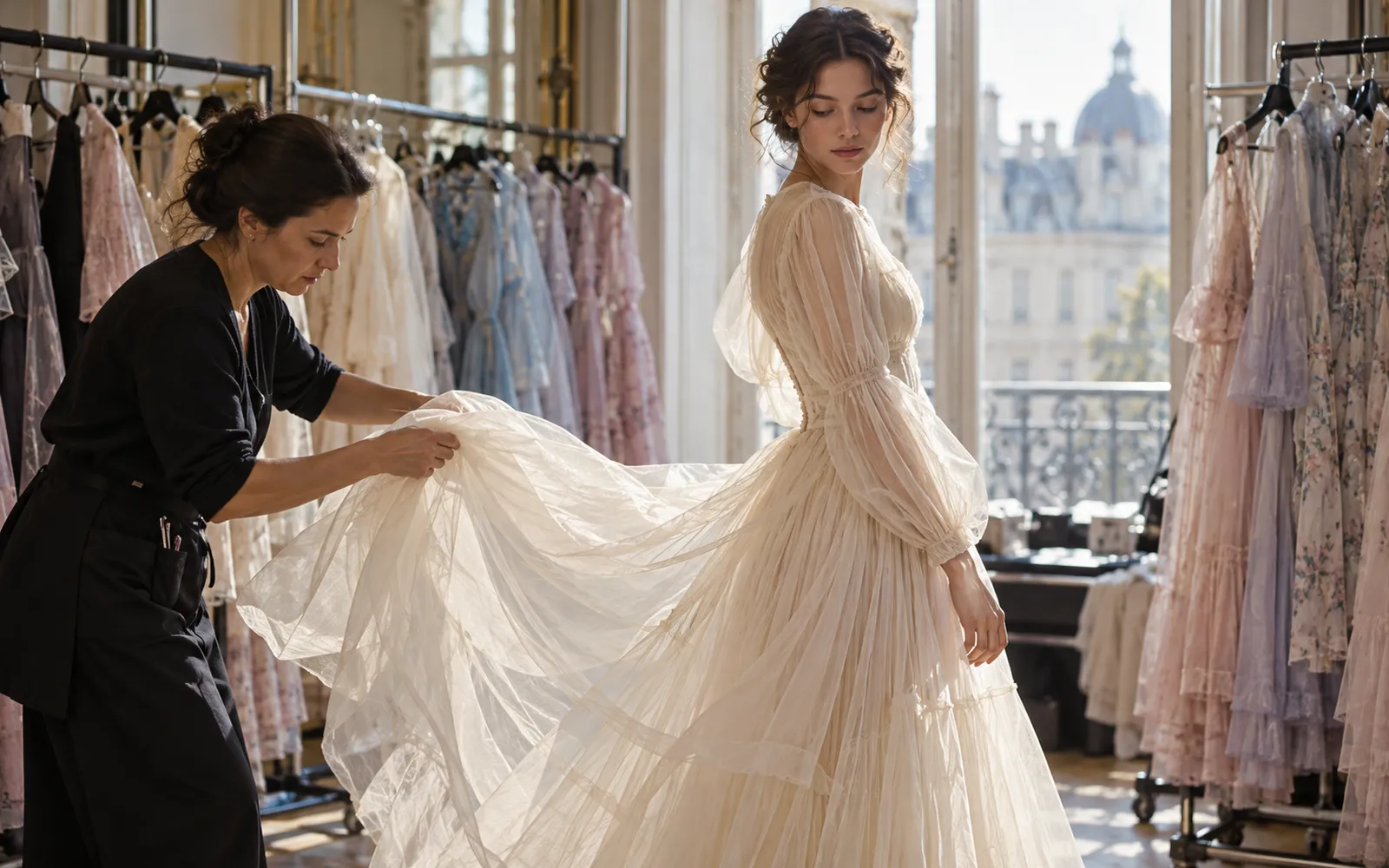
Heavy embroidery can make a garment uncomfortable for long events. Estimate the finished weight early, especially for bridal and occasion pieces, and balance heavy areas with lighter ones. Linings in cotton or silk next to the skin improve comfort under metal threads and sequins.
Testing before bulk
- Embroider a test panel on the actual fabric and lining.
- Wash or dry-clean the panel as the customer will.
- Check for puckering, colour bleeding and thread breakage.
- Wear-test sleeves and seams where embroidery rubs against the body.
Global uses
The same rules apply worldwide: embroidered georgette for Gulf eveningwear, lace on tulle for European bridal, and embroidered cotton for summer resort collections. Choosing the right base is what makes the work last.
Common questions
Why does embroidery pucker? Usually because the fabric is not stable enough or not held taut, or the stitch density is too high for the base. A stabiliser and a test sample solve most cases.
Can you embroider on stretch fabric? Yes, with a cut-away stabiliser and lighter designs that do not restrict stretch.
What fabric suits zardozi? Firm bases such as raw silk, dupion and velvet, which support the weight of metal threads.