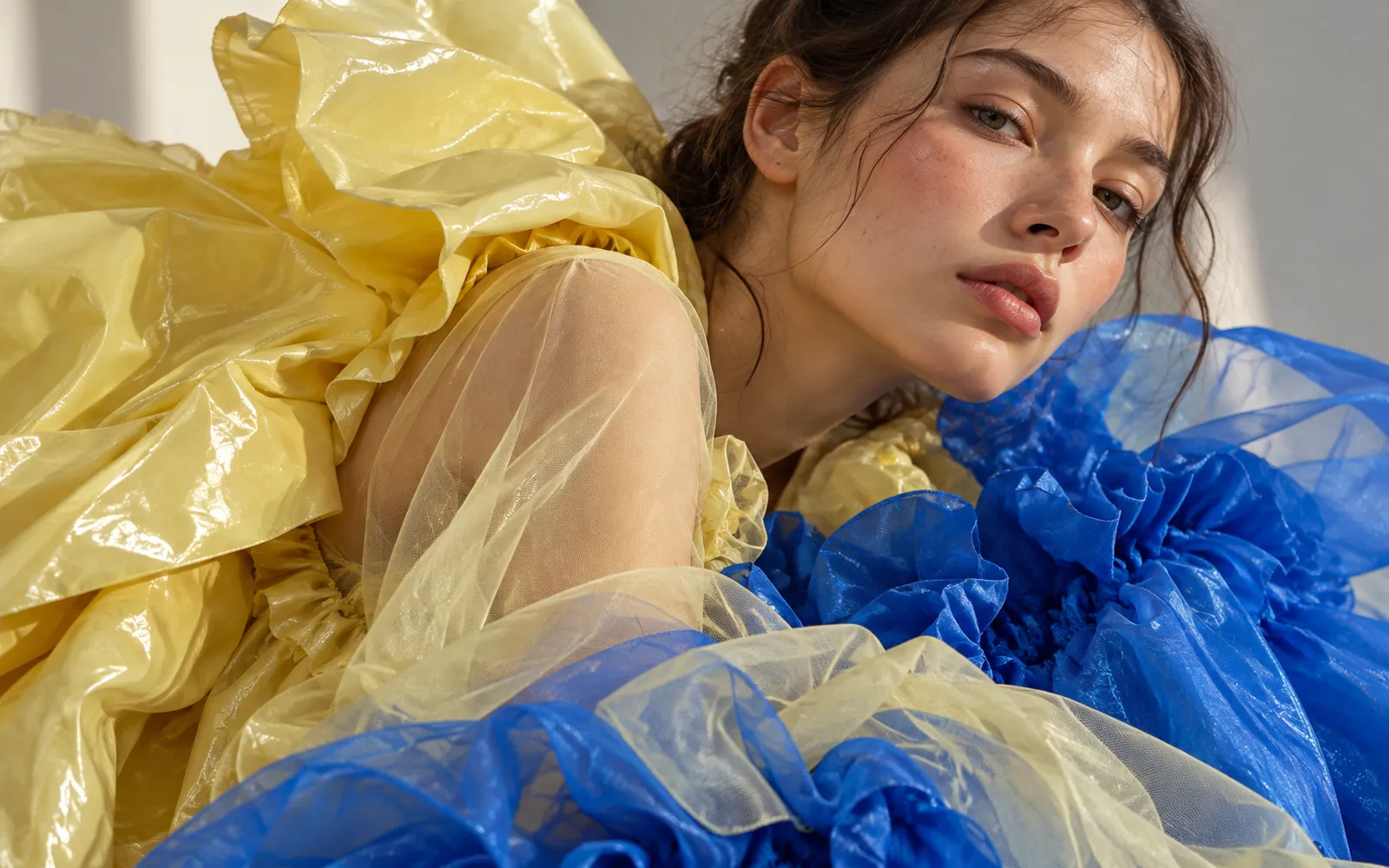
Paris SS27: the featherlight season
Ripstop nylon, organza, voile and crepe: how Paris made weightlessness the fabric story of Spring/Summer 2027.
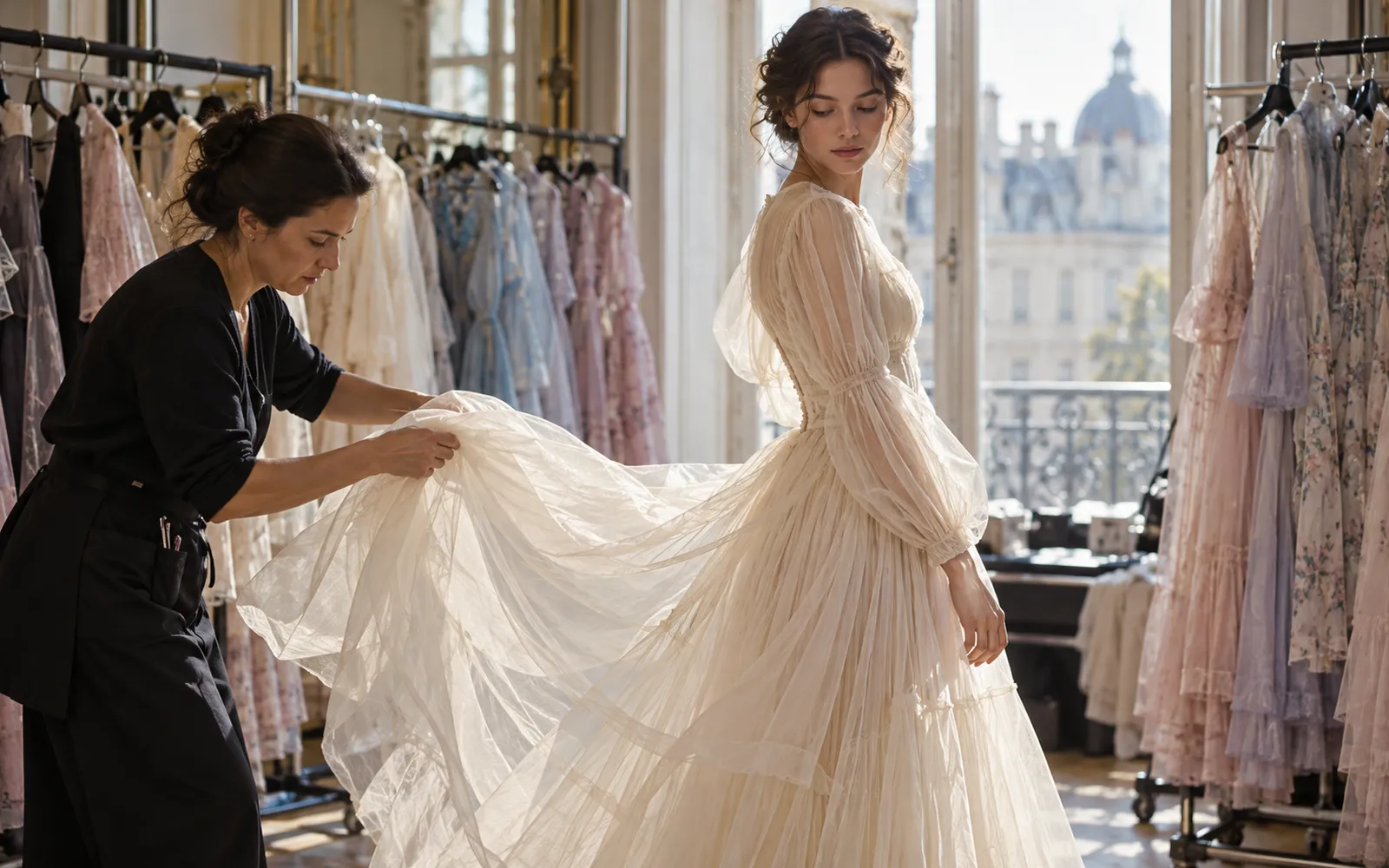
Monocle summed up Paris Fashion Week, which closed on 6 October 2026, as a week of "ethereal looks and featherlight fabrics". After seasons of heavy heritage, designers cleared the slate with airy, almost see-through materials in pastels and neutrals.
The fabrics
- Ultrafine ripstop nylon: Issey Miyake's coats ballooned behind the models like parachutes.
- Organza: sheer organza sets at Chanel under Matthieu Blazy, alongside tweed suits revisited in new finishes.
- Sheer fabrics with soft tailoring: Dior under Jonathan Anderson, with bar jackets and full skirts in new finishes.
- Broderie anglaise: Chloé's mostly white, "less is more" collection.
- Crepe, voile and fine knits: C2 Fashion Studio names "weightless construction" as a key Paris direction, with tangerine in matte cotton, satin and translucent fabrics.
Forecut read
Weightless fabrics travel well into India's climate. For SS27, Forecut expects voile and fine cotton for day, organza and crepe for occasion, and fine-gauge knits as layering pieces. The commercial risk is transparency: line or layer sheer pieces so they work for everyday wear.
What "featherlight" means in a fabric brief
Lightness is measurable. When you brief a mill, specify weight in grams per square metre (GSM), yarn count and construction rather than "light". Most featherlight shirting and dress fabrics sit below about 100 GSM; sheer organza and voile can be well under 60 GSM. Ultra-light technical nylons for outerwear are often in a similar range. Ask for the same quality in two or three weights to compare drape.
Construction tips for light fabrics
- Use fine needles and threads to avoid puckering.
- Choose French seams, narrow rolled hems or bound edges for a clean finish.
- Interface lightly or use self-fabric facings so the outside stays soft.
- Plan pattern pieces to reduce visible seams on sheer areas.
Colour on light fabrics
Pastels and neutrals read softer on sheer bases because the skin or lining shows through. Approve lab dips over the colour of the intended lining or on skin-tone cards, not only on white. Tangerine and other brights shown in Paris need extra care: on voile they can look washed out, while on satin they can look much stronger.
Who should use it, and when
- Hot climates: lightness is a year-round selling point; lead with breathable naturals.
- Temperate markets: sell lightness as a spring and summer layering story.
- Occasion wear: organza and crepe give volume and movement without weight for long events.
Forecut timing
Weightless fabrics are rising for SS27. Forecut expects sheer layering to peak in SS27 and to ease in AW27, while lighter weights in natural fibres continue as a long-term direction linked to climate and comfort.
Common questions
What GSM counts as lightweight? Roughly under 100 GSM for shirting and dress fabrics, and under about 60 GSM for sheer fabrics such as voile, chiffon and organza.
How do you make sheer garments wearable? Layer them over opaque pieces, add linings in key areas, or use them for sleeves and overlays.
Which fibres are best for featherlight summer pieces? Fine cotton, linen, silk, lyocell and lightweight technical nylons, chosen by climate and price point.
Sources: Monocle, Forbes, C2 Fashion Studio.