The hand embroideries of India
Chikankari, zardozi, kantha, phulkari, kasuti, Kutch work and more: where each comes from and how to use it today.
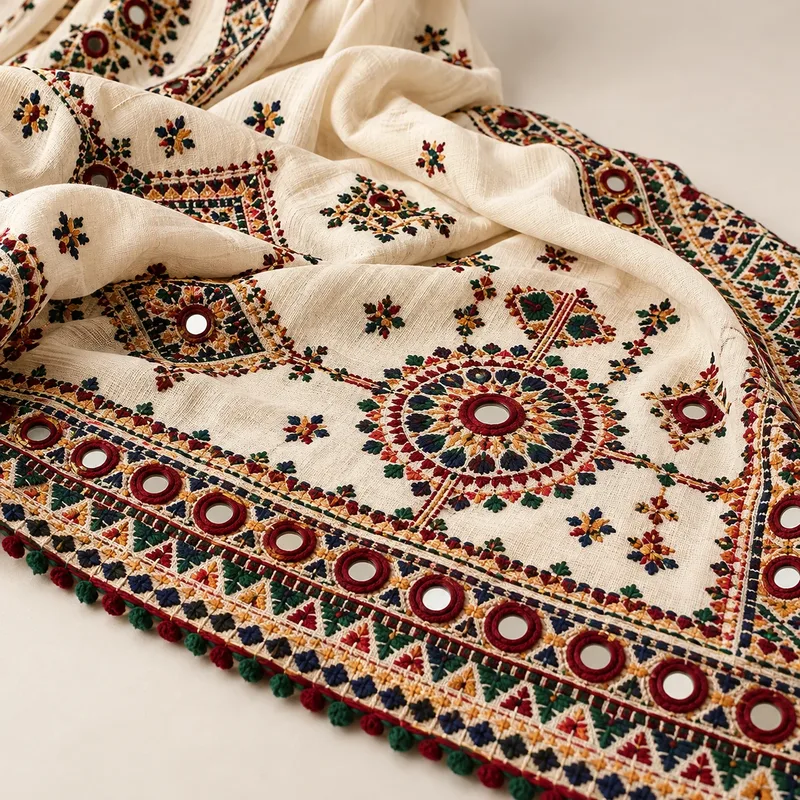
India's hand embroideries are among the richest in the world, and each region has its own language of stitch, colour and motif.
North
Chikankari from Lucknow is delicate white-on-white shadow work. Zardozi uses metal threads for raised, jewel-like ornament. Phulkari from Punjab covers cloth in bright floss silk. Kashmir is known for fine sozni needlework and wool crewel.
West
Kutch work and Rabari embroidery from Gujarat combine interlaced stitches with mirrors. Rajasthan's gota patti appliqués gold and silver ribbon.
East
Kantha from Bengal and Odisha uses running stitches to quilt and decorate. Odisha's Pipli appliqué uses bright cut fabric.
South
Kasuti from Karnataka is counted geometric work identical on both sides. Lambani embroidery uses mirrors and coins, and Toda embroidery from the Nilgiris is red and black on white.
Using hand work today
- Credit the craft and region in product descriptions.
- Work with artisan clusters on fair terms.
- Use hand work as a focal detail, not only all-over.
- Allow longer lead times and expect beautiful irregularity.
Recognising each technique
- Chikankari: fine white or tonal stitches, shadow work seen through sheer cotton.
- Zardozi: raised metallic work with coiled wire, sequins and beads.
- Aari: fine chain stitch made with a hooked needle, often on frames, quick and continuous.
- Phulkari: long darning stitches in floss silk that cover large areas.
- Kantha: running stitches that create texture and quilting.
- Mirror work (shisha): small mirrors held in place by stitched frames.
Price and time
Hand embroidery is priced by the area covered, the stitch density and the technique. Dense zardozi can take many times longer than the same area of aari or kantha. Ask for time estimates per panel and plan production calendars around festival periods, when artisans may be busy or away.
Working fairly with artisans
- Agree prices before work starts and pay on time.
- Provide clear, final designs to avoid rework.
- Respect regional techniques and avoid calling machine imitations by craft names.
- Consider long-term partnerships rather than one-off orders.
International demand
Indian hand embroidery is used by luxury brands around the world, often without credit. Brands that name the technique and region add authenticity. International buyers increasingly ask for documentation of working conditions, so keep records of who made what and on what terms.
Trend direction
Forecut sees tonal hand work, focal placement (yokes, cuffs and borders) and lighter bases rising for SS27, with heavy all-over metal work concentrated in bridal.
Common questions
What is the difference between aari and zardozi? Aari is a chain stitch made with a hooked needle; zardozi is raised metal-thread work. They are often combined.
Which embroidery is best for summer? Chikankari and light thread work on cotton or voile stay breathable.
How can I tell hand embroidery from machine embroidery? Hand work shows small variations in stitch length and tension; the reverse side is also less uniform than machine embroidery.