Knitting designs: stitches, gauges and how to specify them
Rib, cable, pointelle, jacquard and more, plus gauge explained, so you can brief knitwear with confidence.
Knitwear is designed stitch by stitch. Learning the main structures and how to specify them makes sampling faster and results more predictable.
Gauge explained
Gauge (GG) is the number of needles per inch on the knitting machine. Low gauges (3–7GG) make chunky, warm knits; mid gauges (10–12GG) make classic sweaters; fine gauges (14–18GG and above) make light, smooth knits for polos and layering.
Key stitches
- Rib: elastic; for cuffs, hems and fitted bodies.
- Cable: crossed stitches; adds texture and warmth.
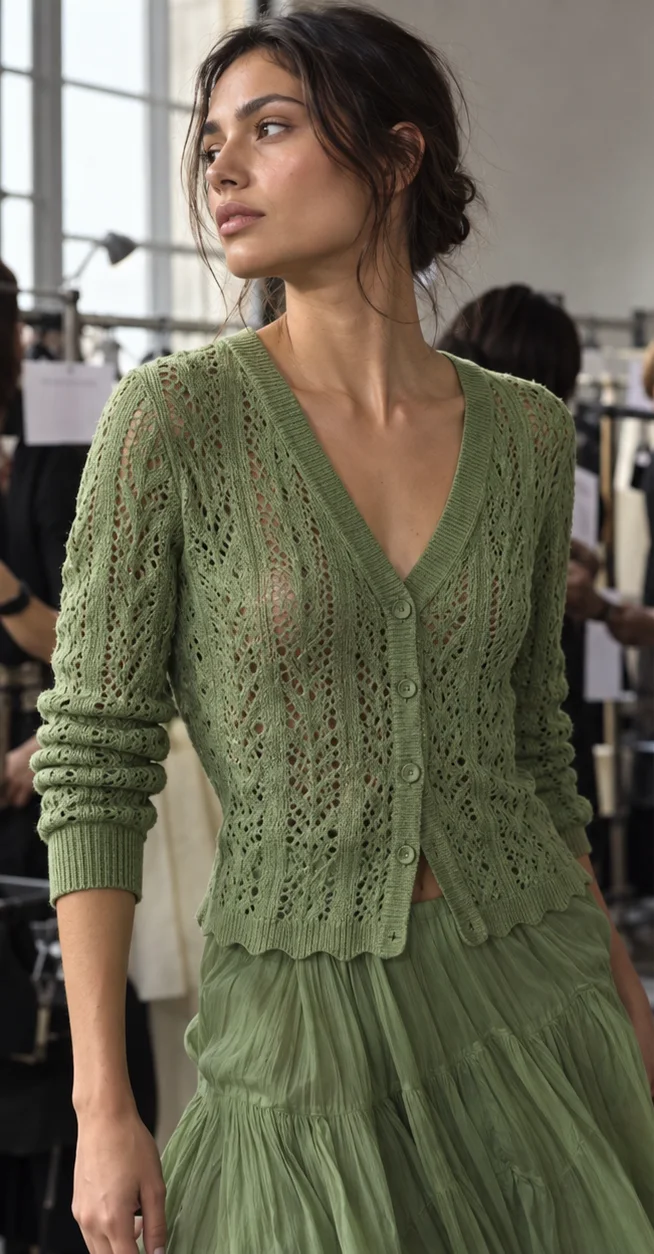
- Pointelle and openwork: eyelets for light summer knits.
- Waffle: grid texture that traps air.
- Jacquard and intarsia: colour patterns and motifs.
How to brief a knit
- Yarn composition and count
- Gauge and stitch, with a swatch or photo reference
- Finished weight per garment
- Trims: rib depth, neck finish, linking
- Colour as Pantone TCX references
Trend direction
For SS27, Forecut sees open-stitch, pointelle and waffle textures rising while heavy chunky ribs have peaked.
Yarns and their character
- Merino wool: soft, elastic, temperature-regulating; ideal for fine gauges.
- Cashmere: very soft and warm; premium price.
- Cotton: cool and breathable; less elastic, can stretch out.
- Linen and linen blends: dry, textured hand for summer knits.
- Viscose and lyocell: drape and sheen for fluid knits.
- Recycled blends: lower-impact options; check pilling and handle.
Fully fashioned and whole garment
Cut-and-sew knits are made from knitted panels cut like woven fabric. Fully fashioned knits are shaped on the machine with fewer cut edges and a cleaner finish. Whole-garment (seamless) knitting produces a complete garment on the machine with almost no waste, but requires specialised machinery.
Common problems and fixes
- Pilling: choose longer fibres and tighter structures.
- Twisting side seams: use balanced yarns and correct finishing.
- Shrinkage: test wash and specify relaxed dimensions.
- Holes at linking: check linking quality and yarn strength.
Knits by climate
Fine-gauge cotton and linen knits extend the knit category into warm climates and summer. Mid-gauge wool covers transitional weather, and low-gauge chunky knits are for cold markets. For hot regions, pointelle and open stitches add airflow.
Briefing checklist
Before sampling, agree on target weight, gauge, stitch, yarn, colour references, measurement chart and trims. A physical swatch or reference sample saves more time than any written description.
Common questions
What does 12GG mean? Twelve needles per inch on the knitting machine, typical for classic mid-weight sweaters.
Which stitch is best for summer knits? Pointelle, mesh and other open stitches in cotton, linen or viscose blends.
How do I reduce pilling? Choose longer-staple fibres, tighter knits and appropriate finishing, and test before bulk.