Weave techniques every designer should know
Plain, twill, satin, dobby, jacquard, leno and pile: how each weave looks, behaves and is used.
The way yarns interlace decides how a fabric looks, feels and wears. Eight weaves cover most of what designers use.
The three basics
- Plain: one over, one under. Strong, matte, crisp.
- Twill: diagonal lines. Durable and drapey.
- Satin: long floats. Smooth and lustrous.
Patterned weaves
- Dobby: small woven geometrics.
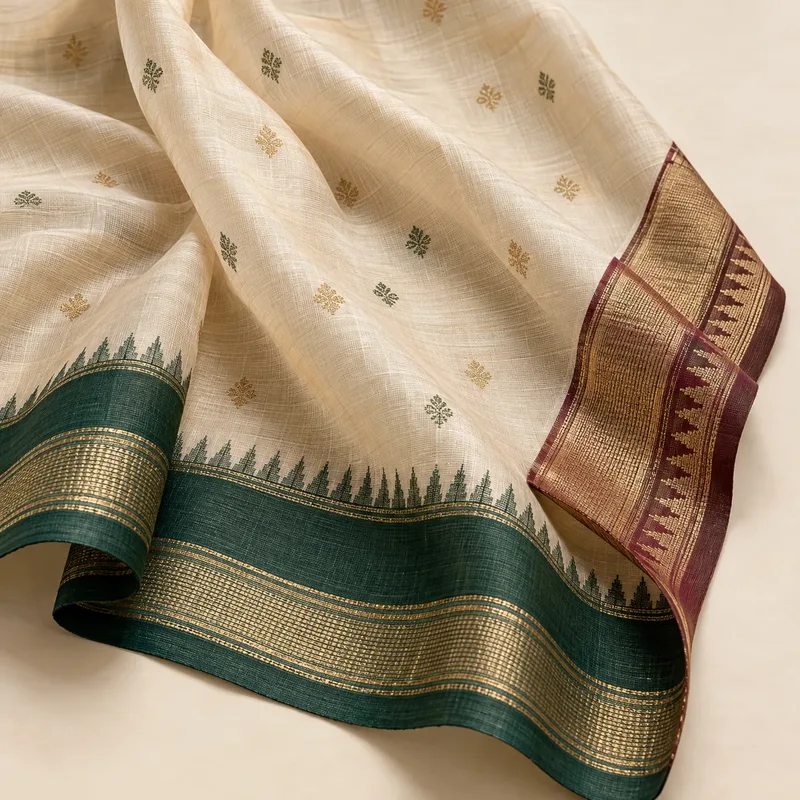
- Jacquard: large, complex motifs, including brocade.
- Leno: twisted warps for open mesh.
Surface weaves
- Pile: loops or cut tufts: velvet, corduroy, terry.
- Seersucker: tension differences create puckered stripes.
Plain weave in detail
Each weft yarn passes over one warp yarn and under the next. Plain weave is the most common construction, used for poplin, voile, muslin, organza, chiffon and canvas. It is strong and stable, gives clear prints and has the same look on both sides. Variations include basket weave, where two or more yarns move together, as in oxford shirting and hopsack.
Twill weave in detail
The weft passes over two or more warp yarns, stepping along each row to create a diagonal line. Twills, such as denim, gabardine, chino and drill, are durable and drape well, and hide soil better than plain weaves. Herringbone reverses the diagonal at intervals for a zigzag pattern.
Satin weave in detail
Long floats, where a yarn passes over four or more yarns, create a smooth, shiny surface. Satin drapes beautifully and suits eveningwear and linings, but floats can snag. When the same weave uses cotton, it is often called sateen.
Where each weave is used
- Shirting: poplin and oxford (plain and basket), end-on-end, small dobbies and seersucker for summer.
- Trousers and outerwear: twills such as gabardine, chino and drill; herringbone and tweed-like twills for winter.
- Eveningwear and linings: satin, taffeta (a crisp plain weave) and jacquard brocades.
- Festive and occasion wear: Banarasi and other brocades are jacquard-type weaves; velvet adds depth for winter weddings.
- Summer bags and layers: leno and open plain weaves for airflow.
Choosing a weave
- Need durability and hidden wear? Choose twill.
- Need a crisp, printable surface? Choose plain weave.
- Need sheen and drape? Choose satin.
- Need texture without print? Choose dobby, jacquard or seersucker.
- Need airflow in hot climates? Choose open plain weaves, leno or seersucker.
Trend direction
Forecut tracks seersucker, textured dobbies and lightweight jacquards rising for SS27, and upholstery-style jacquards and velvets for AW27 jackets and eveningwear.
Common questions
What is the most common weave? Plain weave, used for poplin, voile, muslin and many other fabrics.
Is denim a twill? Yes. Traditional denim is a warp-faced twill, usually with indigo warp and white weft.
What is the difference between satin and sateen? Both use a satin weave; satin usually refers to filament yarns such as silk or polyester, sateen to cotton.