Biodegradable biopolyester: a polyester that can go away
Mariva, a bio-based polymer with PET-like properties that is chemically recyclable and biodegradable. Forecut's innovation report.
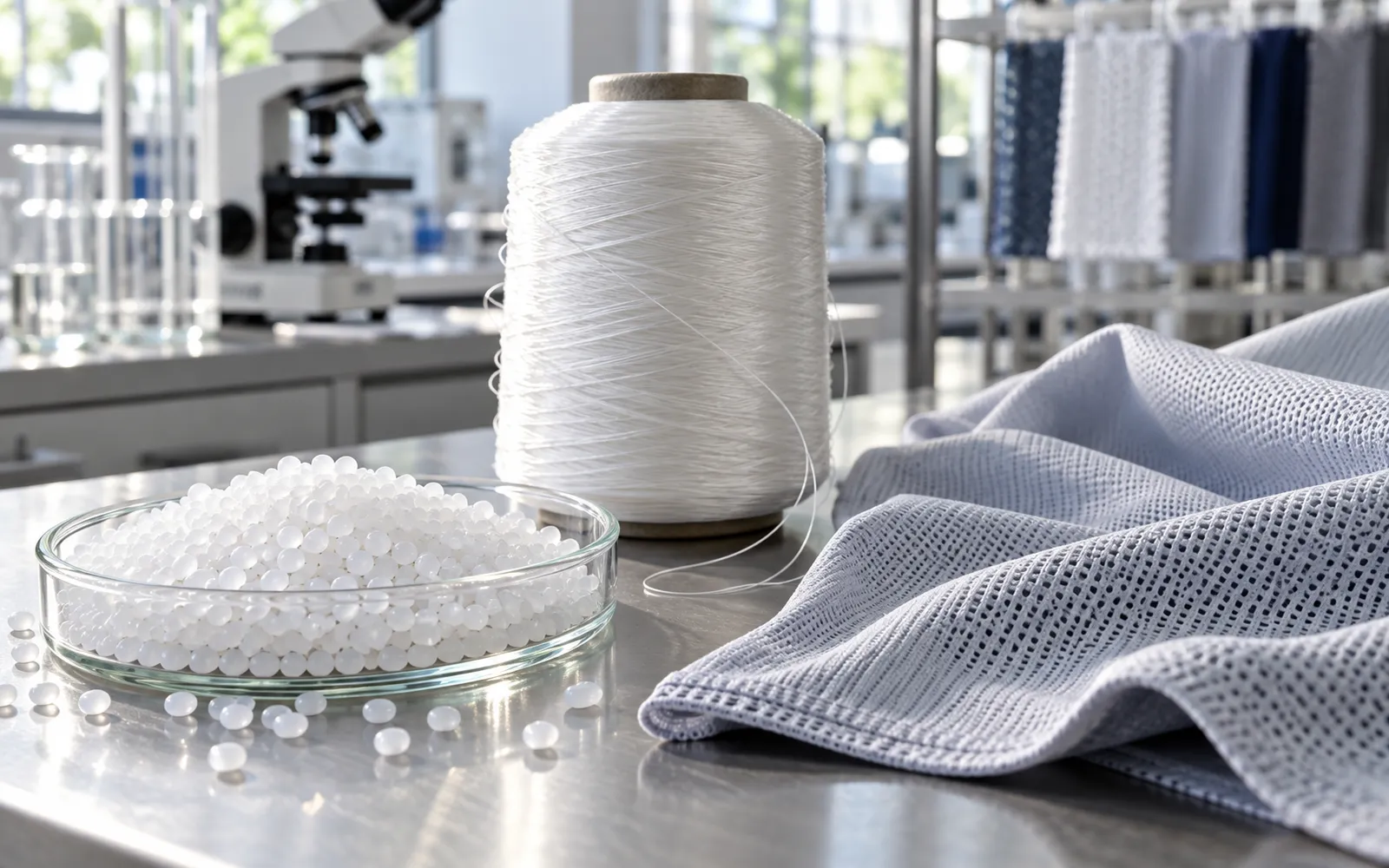
Polyester is the world's most used fibre and a major source of microplastics. A new bio-based polymer aims to behave like polyester in use but break down or be recycled at end of life.
Where it was seen
Senbis Polymer Innovations (Netherlands) won a 2026 Techtextil innovation award for Mariva, announced on 14 April 2026. Senbis founded the start-up Mariva Materials in April 2026 to develop uses in sportswear, footwear, technical textiles and nonwovens.
How it works
Mariva is a bio-based, high-performance polymer with properties similar to PET and polyamide. It is designed for conventional polymerisation and melt-spinning lines, and pilot trials reportedly spun it on standard PET machinery. Senbis says it is chemically recyclable and biodegradable without producing microplastics.
What it means for Indian brands
Indian sportswear and athleisure brands rely heavily on polyester. A material that runs on existing machinery could scale faster than most bio-materials, but it is still at pilot stage.
What to do now
- Track Mariva Materials' commercial partners through 2027.
- Ask your polyester suppliers about bio-based or biodegradable trials.
- Avoid "biodegradable" claims until certified test results are available.
The problem it solves
Polyester is durable and cheap but persists in the environment and sheds microfibres. A bio-based polymer that performs like polyester but breaks down or recycles more easily could address both issues.
Relevance by region
- Global sportswear: polyester-heavy categories that face growing pressure on microplastics.
- Europe: regulations and buyer policies focusing on microplastics and end of life.
- Asia: large polyester manufacturing bases that could adopt materials compatible with existing lines.
Questions to ask suppliers
- Under what conditions does it biodegrade, and has that been independently tested?
- Can it run on our current spinning and knitting lines?
- What is the expected price compared with virgin and recycled polyester?
- When will commercial volumes be available?
Claims and labelling
Do not claim "biodegradable" without certified tests that state the conditions (industrial compost, soil or marine) and timeframe. Many markets restrict vague biodegradability claims.
Forecut verdict
Promising but early. Track partners and pilot results through 2027 before planning products.
Where it fits first
- Linings and pocketing: hidden components with simple performance needs are the lowest-risk trial.
- Short-life categories: event merchandise, uniforms with take-back schemes and single-season promotional pieces.
- Blends you already struggle to recycle: where a polyester component blocks recycling, a material designed for chemical recycling or controlled biodegradation can simplify end-of-life options.
- Not yet: high-performance outerwear, swimwear and activewear where durability, chlorine or UV resistance and colour fastness must match conventional polyester.
Reading it by region
The European Union is tightening rules on green claims, so a biodegradable fibre will only help if the test conditions and timeframe can be stated clearly. In North America, some states restrict "biodegradable" on product labels, so marketing should focus on what has been certified. In South and Southeast Asia, where most polyester garments are made, mills are the right partners for early trials because they can run the fibre on existing lines. In Africa and South America, where much end-of-life clothing ends up, a material that breaks down in real-world conditions would matter most, but evidence for that is still limited.
What to ask before you commit
Ask the supplier for the certified test standard, the conditions (industrial compost, home compost, soil or marine), the time to break down and whether any additives or dyes change the result. Ask how the fabric performs after washing and in storage, because a fibre designed to break down must not degrade in a warehouse. Treat early pilots as learning projects and keep conventional or recycled polyester as the default until results are proven over a full season.
Common questions
Will biopolyester replace polyester? Not soon. It is at pilot stage; recycled polyester remains the main alternative today.
Does biodegradable mean it breaks down anywhere? No. Biodegradation depends on conditions; claims must specify them.
Is biopolyester the same as bio-based polyester? No. Bio-based means made partly from plant sources; biodegradable means it can break down under defined conditions. A fibre can be one, both or neither, so check each claim separately.
When will it be widely available? Forecut expects pilot volumes through 2027 and wider commercial use from about 2028, depending on price and test results.
Sources: Textile World.