Mono-material thread: making garments recyclable at the seams
Amann's AeoniQ Fil cellulose thread lets a cotton or viscose garment stay one material. Why seams matter for recycling.
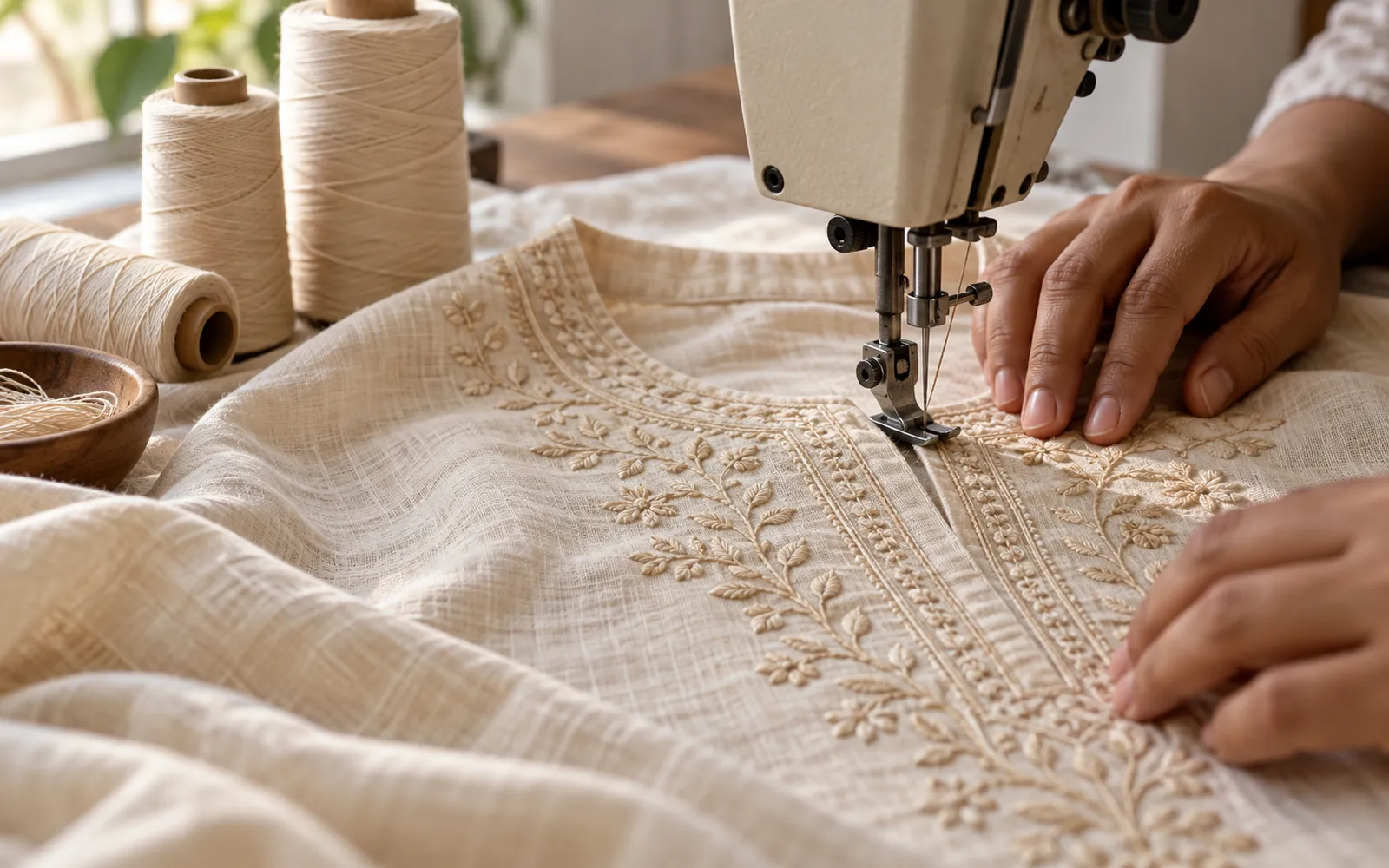
A cotton shirt is rarely 100% cotton: it is usually sewn with polyester thread. Those synthetic seams complicate recycling. A new cellulose thread lets the whole garment stay in one material family.
Where it was seen
Amann (Germany) won a 2026 Techtextil innovation award for AeoniQ Fil, described as the world's first sewing and embroidery thread made from AeoniQ, a wood-pulp-based cellulose fibre. It made its market debut at Texprocess in April 2026.
How it works
Amann describes the thread as microplastic-free and biodegradable, with tear resistance and elasticity approaching synthetic threads and about twice the elasticity of conventional cellulose threads. It is meant for mono-material garments and home textiles.
What it means for Indian brands
Embroidery is central to Indian fashion. A cellulose embroidery thread could let cotton and viscose kurtas, shirts and home textiles be designed for recycling, a growing requirement from European buyers.
What to do now
- Test the thread on cotton basics and embroidered styles for seam strength.
- Combine with cellulose labels and trims for a true mono-material product.
- Watch EU recycling and ecodesign rules that reward mono-material design.
The problem it solves
Garments made from several materials are hard to recycle, because fibres must be separated. Threads, labels and trims are a common source of mixed materials, so matching them to the main fabric helps recycling.
Relevance by region
- Europe: ecodesign and recycling rules increasingly reward single-material products.
- India and South Asia: embroidery-heavy cotton and viscose products could become more recyclable.
- Global basics: T-shirts, shirts and home textiles are the easiest place to start.
Questions to ask suppliers
- What is the seam strength compared with polyester thread?
- Does the thread perform on high-speed sewing and embroidery machines?
- Which colours are available and how colour-fast are they?
- What is the price difference per garment?
Claims and labelling
Say "sewn with cellulose thread" or "designed as a mono-material garment" only if the fabric, thread, labels and trims all belong to the same fibre family.
Forecut verdict
A practical step towards recyclable design. Test it on simple cotton styles first.
How to use it in a collection
- Pick one simple style first. A 100% cotton shirt, T-shirt or kurta has few components, so switching the sewing thread, the care label and the buttons to cotton, cellulose or corozo makes the whole garment one fibre family without a redesign.
- Audit every component. List fabric, thread, interlining, labels, buttons, zips, elastic and embroidery yarn in the tech pack. Interlinings and polyester labels are usually the hidden mixed materials.
- Test on the real machines. Cellulose threads can break more easily on high-speed overlock and bartack operations; run a sample batch at production speed and check seam strength after five washes.
- Write it into the tech pack. Add the thread type and count to the bill of materials so the factory does not substitute a cheaper polyester core-spun thread in bulk.
Regional sourcing notes
In Europe, single-material design supports ecodesign and extended producer responsibility schemes that are being phased in for textiles, and some buyers already ask for a fibre breakdown by component. In India, Bangladesh and Pakistan, where much cotton and viscose sewing is done, cotton and lyocell threads are available locally, but colour ranges are narrower than for polyester, so plan the colour card early. In North America and Oceania, the first use is usually basics and home textiles sold with a take-back or resale programme, where easier recycling has a direct value.
What it does not solve
A mono-material garment is easier to recycle only if a recycling route exists for that fibre in the market where it is thrown away. It does not make a garment biodegradable, and dyes and finishes can still affect recycling quality. Treat it as one step in design for recycling, alongside durable construction and clear fibre labels.
Common questions
Why does thread matter for recycling? Polyester thread in cotton garments contaminates cotton recycling streams.
Can cellulose thread be used for embroidery? Yes, it is designed for both sewing and embroidery.
Is cotton thread strong enough for jeans? Usually not for the main seams of heavy denim, which take high stress; it is better suited to shirts, T-shirts, kurtas and home textiles. Test seam strength before using it on heavier fabrics.
Does a mono-material garment cost more? The thread itself can cost a little more and may slow some operations, but the difference per garment is usually small compared with fabric and making costs. Ask the factory for a costed sample.
Sources: Textile World.