Plant-based stretch: the easy sustainability swap for spandex
Stretch fibre with 70% plant-based content, a drop-in for mills and up to 45% lower footprint. Forecut's innovation report.
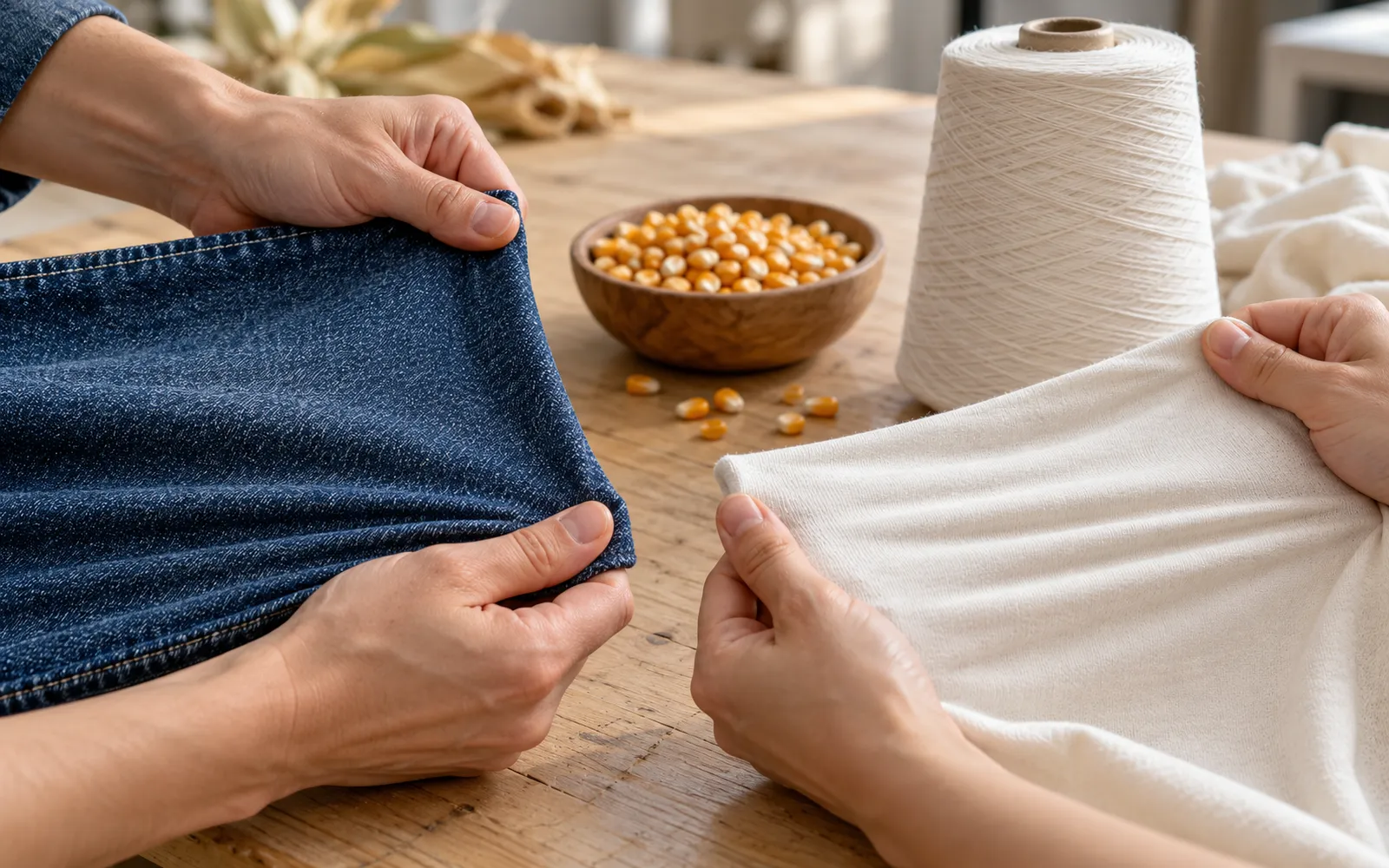
Almost every jean, legging, shirt and swimsuit with "comfort stretch" relies on spandex (elastane), traditionally made from fossil feedstock. A renewable version of LYCRA® fibre replaces 70% of that content with a plant-based ingredient, made from field corn grown in the US Midwest.
Where it was seen
At Milano Unica (7–9 July 2026, Fiera Milano Rho), European mills showed ready-to-wear and swimwear fabrics made with the fibre: Milior (wovens), Brugnoli and Maglificio Alto Milanese (knits for sport and ready-to-wear) and Casa Da Malha (knits). Carvico's Vita Life swimwear fabrics are an earlier commercial example.
How it works
The plant-based content replaces part of the fibre's fossil-derived building block. Because the fibre is a drop-in replacement, mills can switch without changing machinery, and the fabrics keep the stretch and recovery of conventional LYCRA® fibre. A 2026 Ramboll life cycle assessment estimates a carbon footprint up to 45% lower than the fossil-derived version.
What it means for Indian brands
This is the lowest-risk sustainability upgrade for denim, activewear, shapewear and stretch shirting: the garment, fit and price story stay the same while the fibre story improves. It suits Indian exporters selling to EU and US brands that ask for lower-impact materials.
What to do now
- Ask your denim and knit mills whether they can offer renewable stretch versions of core qualities.
- Test it on one best-selling stretch article for AW27 or SS28 before scaling.
- Keep the claim precise: "made with 70% plant-based content" refers to the stretch fibre, not the whole garment.
The problem it solves
Stretch is now expected in jeans, leggings, swimwear and many shirts, so even a small percentage of elastane is used across billions of garments. Replacing part of that fossil-based content is one of the few sustainability changes that does not affect fit, comfort or appearance.
Relevance by region
- Europe: buyers ask for lower-impact materials and documented claims; a strong fit for export denim and swimwear.
- North America: large activewear and denim markets where stretch is standard.
- Asia: major denim and knit manufacturing hubs can adopt it without new machinery.
- Southern hemisphere: swimwear brands in Australia and Brazil are natural early adopters.
Questions to ask suppliers
- What share of the stretch fibre is plant-based, and how is it verified?
- Is the price premium per metre fixed or volume-based?
- Are stretch and recovery identical to your current quality in your own tests?
- Which certifications or life cycle data can you share?
Claims and labelling
Plant-based content applies to the stretch fibre only, which is usually a small percentage of the garment. Say "stretch fibre made with 70% plant-based content" rather than calling the garment plant-based or bio-based.
Forecut verdict
A low-risk upgrade. Test it on one high-volume stretch style; if fit and recovery match, it can become the default for that quality.
Common questions
Does plant-based stretch feel different? It is designed as a drop-in replacement, with the same stretch and recovery as the conventional fibre.
Can I call my jeans "plant-based"? No. Only the stretch fibre contains plant-based content; describe it precisely.
Sources: LYCRA.