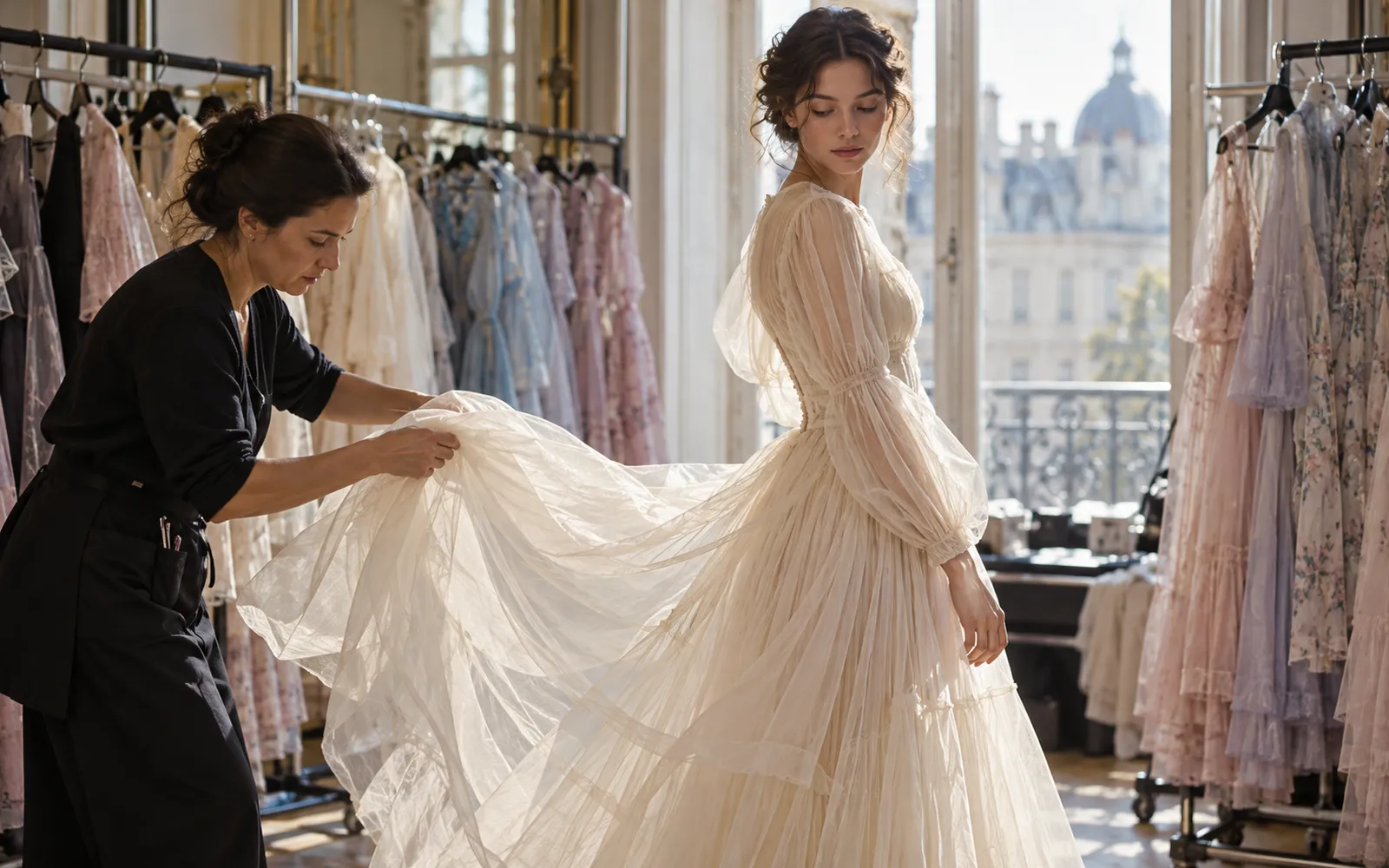
Recycled-plastic embellishment: waste turned into couture flowers
Vin + Omi's 3D flowers from recycled plastic at London Fashion Week SS27. How embellishment can carry a circular story.
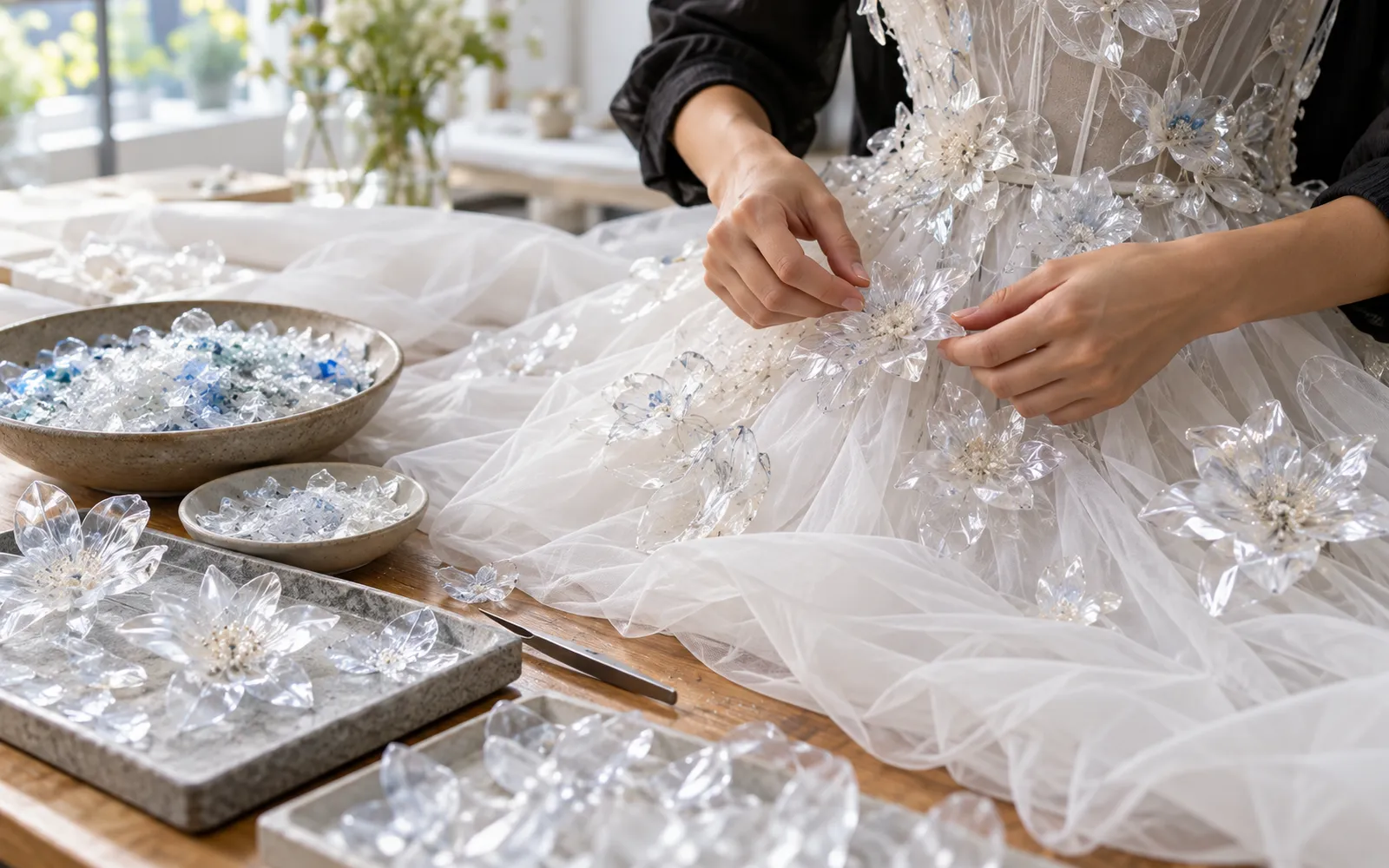
Sequins, beads and three-dimensional flowers are usually made from new plastic. Designers are now making embellishment from recycled plastic waste instead.
Where it was seen
At London Fashion Week SS27 (September 2026), Vin + Omi showed a sheer white gown covered in hundreds of 3D flowers made from recycled plastic, part of a wider runway trend for appliqué flowers.
How it works
Plastic waste is cleaned, shredded and reformed into sheets, films or filaments, then cut, heat-shaped or moulded into petals, sequins and beads that are applied by hand or machine, just like conventional embellishment.
What it means for Indian brands
India is the world's embellishment workshop. Recycled-plastic sequins and flowers let Indian embroidery units offer export clients a circular version of the same craft. Expect it first in capsule collections in 2027.
What to do now
- Source recycled sequins and beads with verified recycled content.
- Pair with appliqué and organza flowers, a key SS27 runway trend.
- Tell the waste-to-flower story clearly on product pages.
The problem it solves
Embellishment uses large quantities of small plastic parts, usually made from new material. Using recycled plastic reduces virgin plastic use and gives a strong story for statement pieces.
Relevance by region
- India: a global centre for embroidery and embellishment, well placed to supply recycled options.
- Europe and the UK: buyers looking for circular stories in eveningwear and occasion wear.
- Middle East: embellished eveningwear and bridal could adopt recycled sequins for capsule lines.
Questions to ask suppliers
- What share of the material is recycled, and how is it verified?
- Are colour, shine and durability equal to standard sequins?
- Can the embellishment withstand dry cleaning or washing?
- What are the minimum order quantities?
Claims and labelling
Use specific wording ("sequins made from 100% recycled PET") and keep supplier certificates. The garment as a whole is not "recycled" if only the embellishment is.
Forecut verdict
A strong capsule story for 2027. Start with one hero piece to test customer response.
How to use it in a collection
- Start with placement, not all-over work. A recycled-sequin yoke, cuff or hem border on an otherwise plain dress tests customer response at a fraction of the cost of a fully embellished gown.
- Choose the hero piece carefully. Evening tops, occasion skirts and festive blouses sell on surface; they are the best place to tell the recycled story.
- Match the base fabric. Lightweight embellishment suits sheer organza, tulle and georgette; heavier three-dimensional flowers need a stable base such as crepe, satin or a fused panel.
- Plan care instructions early. Recycled PET sequins can behave differently under heat, so test pressing, steaming and dry cleaning before bulk.
Reading it by region
In India and the Gulf, where festive and wedding wear relies on sequins, beads and mirror work, the opportunity is volume: a single karigar workshop can switch suppliers without changing technique. In Europe, buyers will ask for documentation first, so keep certificates and percentages ready. In North America, recycled embellishment works best in party and holiday capsules where shoppers already accept a premium. In Africa, Lagos and Johannesburg designers who already work with beadwork and fringe can use it as a craft-plus-circularity story. In Oceania, race-day and summer occasion wear are the natural testing ground.
A simple test plan
Order a sampling quantity of recycled sequins or flowers in two of your core evening colours. Make one placement style and one heavier style, wear-test both for a full evening, wash or dry clean them as you would in store, and compare shine, colour and loss of pieces with your current material. If the results match, move one best-selling style across for the next season and tell customers exactly which part is recycled.
Common questions
Do recycled sequins look different? Good-quality recycled sequins look the same; test colour and shine against your standard.
Can a garment with recycled sequins be called sustainable? Avoid broad terms. Describe the specific recycled component.
Do recycled sequins cost more? Usually a little at first, mainly because order quantities are smaller. Because embellishment is a small share of a garment's total cost, the difference per piece is often modest.
Can hand embroiderers use them? Yes. Recycled sequins and beads are applied with the same needles, threads and tambour techniques as standard ones, so workshops do not need new skills.
Sources: TheIndustry.fashion.